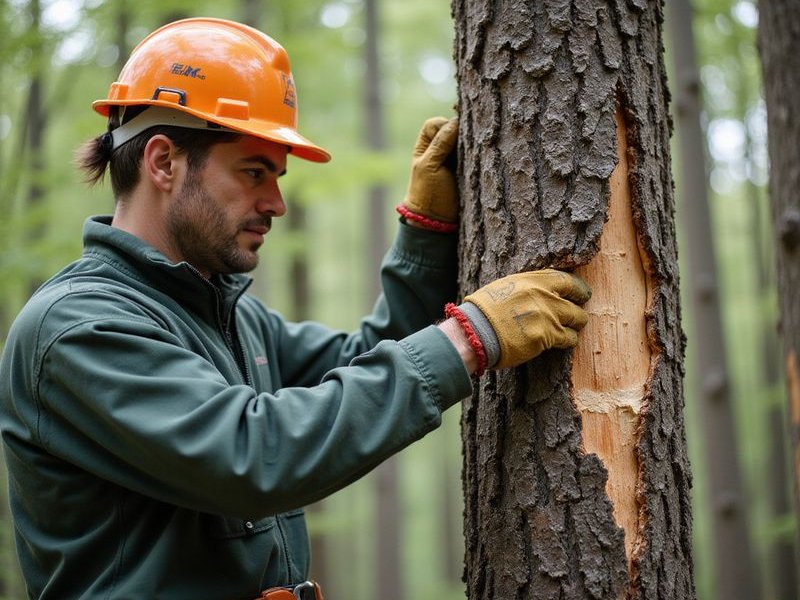
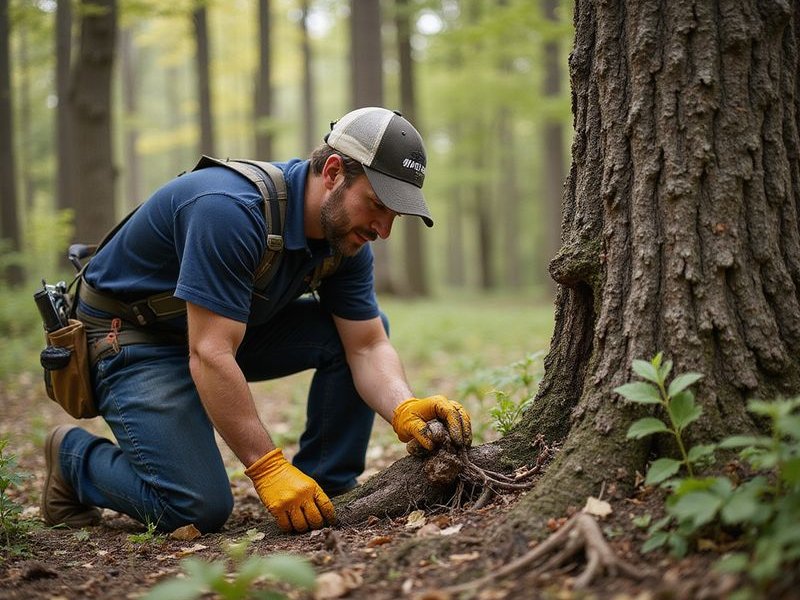
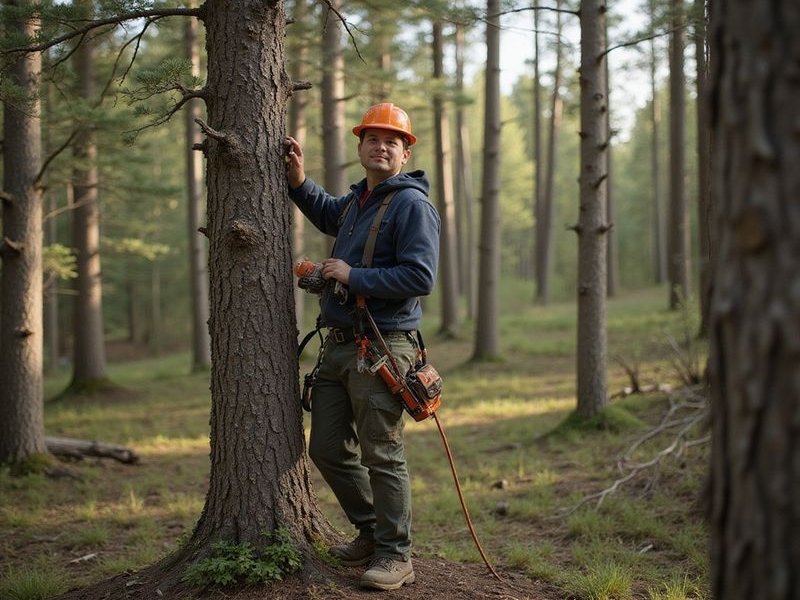
What is a Tree Risk Assessment?
A tree risk assessment is a systematic evaluation of a tree’s potential to fail and cause harm. It’s more thorough than a free removal estimate—it’s a professional analysis that documents tree condition, identifies defects, evaluates targets, and quantifies risk.
Conducted by an ISA Certified Arborist using industry-standard methodology, risk assessments provide:
- Objective analysis of tree health and structural integrity
- Documentation suitable for insurance, legal, and real estate purposes
- Specific recommendations beyond simple “remove or keep”
- Peace of mind that you’re making informed decisions
When Do You Need a Tree Risk Assessment?
Concerned About a Specific Tree
You’ve noticed something wrong:
- A tree that’s started leaning
- Cracks in the trunk
- Mushrooms growing at the base
- Major deadwood in the canopy
- A tree that drops branches regularly
A risk assessment determines if your concern is justified and what to do about it.
Buying or Selling Property
Large trees affect property value—positively or negatively:
- Buyers want to know if trees are assets or liabilities
- Sellers can address concerns before they derail transactions
- Real estate agents request assessments to facilitate sales
A professional report provides documentation both parties can rely on.
Insurance Questions
Insurance companies sometimes request tree assessments:
- After a claim, to document remaining trees
- When underwriting properties with large trees
- To justify premium adjustments
- Following neighbor damage claims
Our written reports satisfy insurance documentation requirements.
Construction Near Trees
Planning to build a deck, addition, or outbuilding near trees?
- Will construction damage roots and destabilize the tree?
- Will the tree need removal eventually anyway?
- How close can you build without harming the tree?
Assessment before construction prevents problems later.
Post-Storm Evaluation
After severe weather, some trees are obviously damaged. Others appear fine but may be compromised:
- Internal cracks not visible externally
- Root movement without obvious lean
- Weakened branch attachments
- Crown damage that will lead to decline
Assessment after storms identifies hidden risks.
Neighbor Disputes
When trees span property lines:
- “Your tree is going to fall on my house”
- “That tree is dropping limbs on my car”
- Boundary and ownership questions
A third-party professional assessment provides objective documentation.
What We Evaluate
Structural Integrity
Trees fail when structural capacity is exceeded by loads. We assess:
Trunk
- Cracks, splits, and seams
- Decay and cavities
- Lean and history of movement
- Previous damage and wound response
- Abnormal swelling or depressions
Root Zone
- Root collar visibility and condition
- Signs of root decay
- Soil heaving or cracking
- Recent soil disturbance
- Circling or girdling roots
Branch Attachments
- Co-dominant stems with included bark
- Dead and dying branches
- Hanging broken branches
- Branch attachment strength
- Overextended limbs
Tree Health
Tree health affects failure likelihood:
Canopy Condition
- Leaf size, color, and density
- Dieback patterns
- Epicormic sprouting
- Crown symmetry
Disease and Pest Presence
- Fungal fruiting bodies
- Canker diseases
- Boring insect evidence
- Vascular disease symptoms
Vigor Indicators
- Annual growth rate
- Wound closure
- Overall vitality
Target Analysis
Risk exists only when there’s something to be harmed:
Targets We Consider
- Houses and other structures
- Vehicles and parking areas
- Walkways and driveways
- Play areas and outdoor living spaces
- Utility lines
- Neighboring properties
Occupancy Patterns A tree over a rarely-used back corner is different from one over a child’s swing set. We consider how often targets are occupied.
Site Factors
External conditions affecting the tree:
- Wind exposure and direction
- Soil conditions and drainage
- Recent construction or grading
- Changes in light exposure
- History of similar failures nearby
The Assessment Process
1. Purpose Discussion
Before visiting, we discuss:
- What prompted your concern
- How you’ll use the assessment
- Specific trees or whole property
- Any relevant history
2. On-Site Inspection
The arborist examines each tree systematically:
- Visual inspection from all angles
- Probing for decay when indicated
- Sounding trunk with mallet
- Root collar excavation if needed
- Photography of defects and overall condition
3. Risk Matrix Application
Using ISA methodology, we assess:
- Likelihood of failure: Based on defects and condition
- Likelihood of impact: Based on target and occupancy
- Consequences of failure: Based on target value
These combine into a risk rating.
4. Report Preparation
Your written report includes:
- Executive summary with bottom-line recommendation
- Detailed tree description
- Defects and conditions observed (with photos)
- Risk rating and explanation
- Recommended actions with timeline
- Limitations and assumptions
Risk Ratings Explained
We use ISA’s risk rating system:
Low Risk Failure unlikely or consequences minor. No action required; reassess in 3-5 years.
Moderate Risk Some probability of failure with moderate consequences. Risk reduction recommended within timeframe (pruning, cabling) or enhanced monitoring.
High Risk Significant defects with probable failure affecting valuable targets. Mitigation should occur promptly—within weeks to months.
Extreme Risk Imminent failure or severe defects with serious consequences. Immediate action required—restrict access, remove tree, or make emergency modifications.
Beyond the Assessment
Implementation Options
Once risk is identified, options may include:
Tree Removal When risk is unacceptable and can’t be mitigated through other means.
Risk Reduction Pruning Removing deadwood, reducing weight, or improving structure through proper pruning.
Cabling and Bracing Supporting weak attachments or co-dominant stems with hardware.
Target Modification Moving play areas, rerouting paths, or accepting some level of risk.
Monitoring Periodic reassessment for trees with moderate risk that might decline.
Our Approach
We don’t profit from recommending unnecessary removals. Our goal is accurate assessment and practical recommendations. If a tree can be safely retained with proper care, we’ll tell you. If removal is the right answer, we’ll explain why clearly.
Schedule Your Tree Assessment
If you’re concerned about a tree’s safety—or need professional documentation for insurance, real estate, or legal purposes—our ISA Certified Arborist can help.
Call (218) 555-0391 to schedule your tree risk assessment. We’ll provide the honest, professional evaluation you need to make informed decisions.