Lake Superior Storms and Your Trees
Living in Duluth means living with weather. Lake Superior generates some of the most powerful storms in the upper Midwest:
Nor’easters: These intense storms bring sustained winds of 40-60 mph with gusts over 70 mph. Trees that have withstood years of weather can fail suddenly under these conditions.
Ice Storms: Freezing rain accumulation adds tremendous weight to branches. Even a quarter inch of ice can bring down large limbs; a full inch can topple entire trees.
Heavy Snow Events: Duluth averages 86 inches of snow annually. Wet, heavy snow loads stress trees already weakened by disease, damage, or poor structure.
Summer Thunderstorms: July and August bring severe storms with lightning, straight-line winds, and occasional microbursts capable of flattening entire stands of trees.
Combined Events: The worst damage often comes from storms combining factors—rain-saturated soil reducing root anchor followed by high winds, or ice accumulation followed by heavy snow.
When to Call Our Emergency Line
Call (218) 555-0391 immediately when:
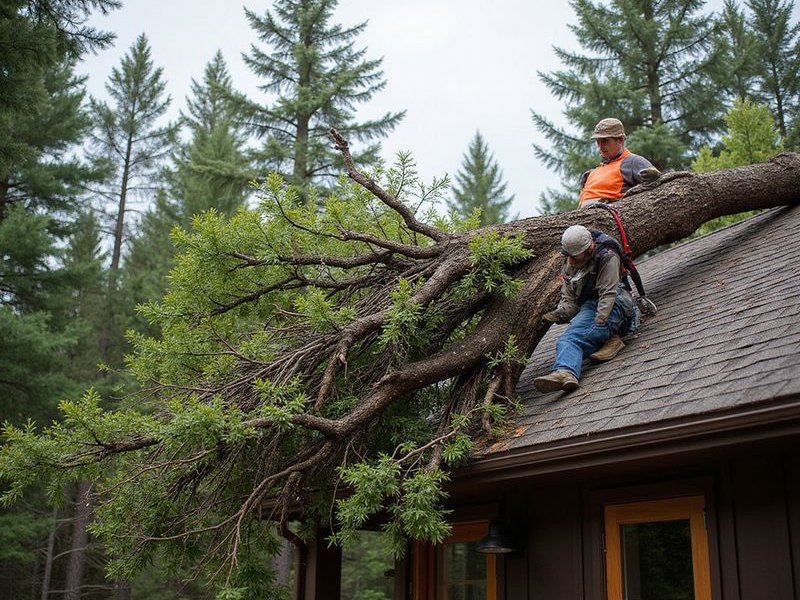
Trees Are On or Threatening Structures
- Tree has fallen on your house, garage, or outbuilding
- Large limbs have penetrated your roof
- A leaning tree threatens your home during ongoing storm
- Trees have damaged cars, RVs, boats, or other property
Trees Are Blocking Access
- Fallen trees block your driveway and you can’t get out
- Trees are blocking shared access roads
- Emergency vehicles cannot reach your property
Trees Are In Contact with Power Lines
- Never approach a tree touching power lines
- Call your utility company AND us—we coordinate with utilities
- Downed lines can energize the ground around them
Trees Present Immediate Danger
- Partially uprooted trees that could fall at any moment
- Broken limbs hanging in the canopy (“widow makers”)
- Split trunks held together by bark alone
What Happens When You Call
Step 1: Emergency Assessment
When you call our 24/7 line, we gather critical information:
- Is anyone injured or trapped?
- Is the situation immediately dangerous?
- Is power involved?
- What type of structure is affected?
- Can you safely send us photos?
For life-threatening situations, we direct you to call 911 if you haven’t already.
Step 2: Response Mobilization
Based on urgency, we dispatch our emergency crew with appropriate equipment:
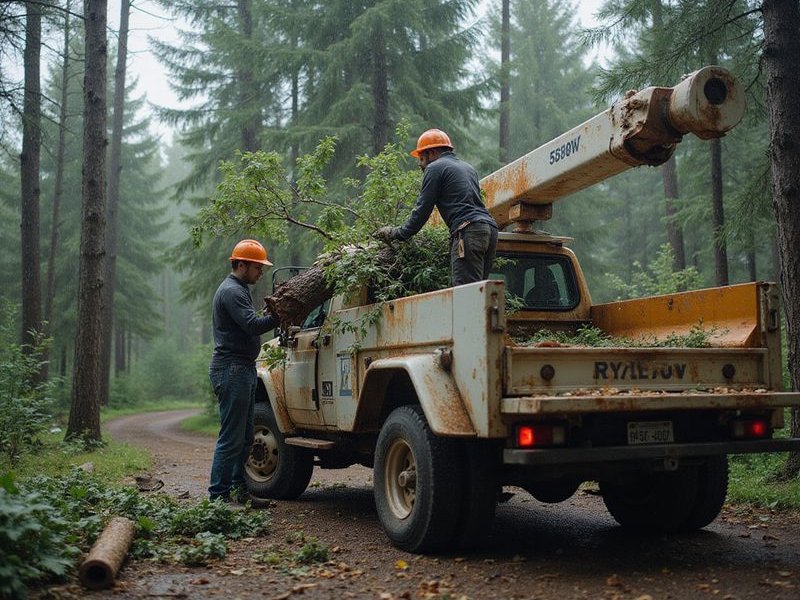
- Bucket truck for aerial access
- Crane for heavy lifting
- Chainsaws and rigging equipment
- Flood lights and generator for night work
- Traffic control equipment for roadside situations
Step 3: Scene Securing
On arrival, our first priority is safety:
- Establish a safe work zone
- Assess tree stability and potential for further movement
- Coordinate with utilities if power lines are involved
- Ensure no one enters the danger area
Step 4: Controlled Removal
Even in emergencies, we work systematically:
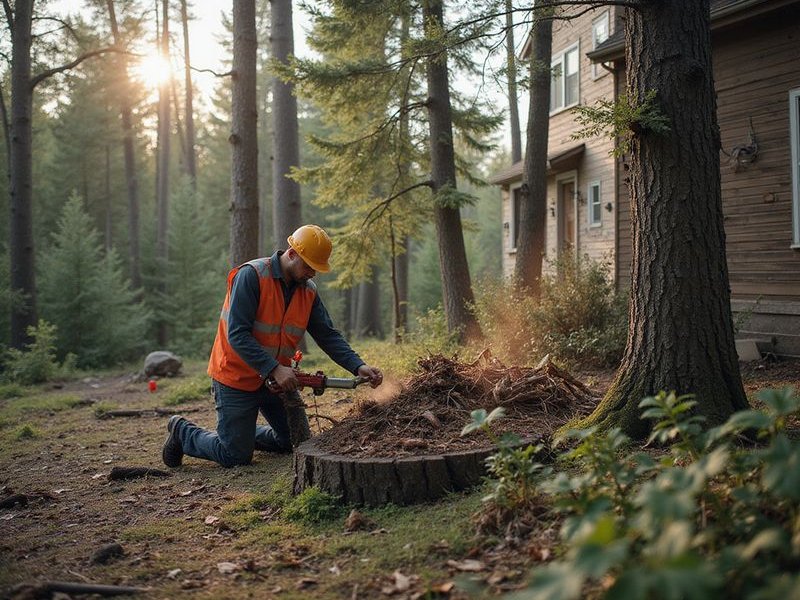
- Remove immediate hazards (sections pressing on structures)
- Use proper rigging to prevent additional damage
- Document damage thoroughly for insurance purposes
- Clear debris to restore access
Step 5: Documentation and Cleanup
Before we leave:
- Photograph damage from multiple angles
- Document the scope of removal work
- Provide temporary securing if structural damage exists
- Remove all debris (weather permitting)
Insurance Claim Support
Most homeowner’s insurance policies cover emergency tree removal, but policies vary. Read our complete guide on whether homeowner’s insurance covers tree removal for details. Here’s a summary:
What’s Typically Covered
- Tree removal when the tree damages a covered structure
- Debris removal associated with the damage
- Temporary repairs to prevent further damage
- Living expenses if your home is uninhabitable
What’s Usually Not Covered
- Removal of standing trees that might fall (preventive removal)
- Damage to landscaping, gardens, or lawns
- Trees that fall in your yard but damage nothing
- Removal of neighbor’s tree from your yard (often their policy covers this)
How We Help Your Claim
Detailed Documentation
- Before and after photos
- Written description of damage and removal scope
- Clear, itemized invoices
Professional Standards
- Work performed by ISA Certified Arborist
- Proper equipment and techniques documented
- Insurance companies trust professional assessments
Adjustor Communication
- We can meet with adjustors if scheduled in advance
- Provide additional documentation as requested
- Answer technical questions about tree failure and removal
Preventing Storm Emergencies
While we’re here when disaster strikes, the best emergency is one prevented. Learn how to prepare your trees for Lake Superior storms before the next system arrives.
Regular Tree Assessment Our ISA Certified Arborist can identify trees at high risk of failure—those with decay, weak branch attachments, root problems, or structural defects—before storms put them to the test.
Proactive Pruning Crown thinning reduces wind resistance. Deadwood removal eliminates weak branches. Clearance trimming keeps branches away from structures. All reduce emergency risk.
Problem Tree Removal Sometimes the safest option is removing a high-risk tree before it fails on its own schedule. A controlled removal costs less than an emergency and causes no collateral damage.
Areas We Serve
Our emergency response covers:
Duluth and Neighborhoods
- Park Point, Canal Park, Downtown
- Lincoln Park, West End, Spirit Valley
- Piedmont Heights, Morley Heights
- East Hillside, Chester Park, Congdon
- Lakeside, Woodland, Hunter’s Park
- West Duluth, Morgan Park, Fond du Lac
Surrounding Communities
- Hermantown
- Proctor
- Cloquet (longer response time)
- Two Harbors (longer response time)
- Superior, WI
Response time depends on location, current weather, and demand during major storm events. We prioritize the most dangerous situations.
Call Now for Emergency Response
24/7 Emergency Line: (218) 555-0391
When Lake Superior sends its worst, we’re ready. Our emergency crew has handled hundreds of storm-damaged trees across Duluth’s challenging terrain. We respond quickly, work safely, and help you navigate the insurance process.
If you’re dealing with a tree emergency right now, don’t wait. Call us.