Emerald Ash Borer: A Serious Threat to Northern Minnesota
Emerald ash borer (EAB) is an invasive beetle from Asia that has killed hundreds of millions of ash trees across North America since its discovery in Michigan in 2002. The pest has now reached the Duluth area, putting our region’s ash trees at risk.
Understanding the Threat
The Insect: Adult emerald ash borers are small (1/2 inch), metallic green beetles. The adults cause minimal damage—it’s the larvae that kill trees.
The Damage: Female beetles lay eggs in bark crevices. Larvae hatch and tunnel through the inner bark and cambium layer, creating S-shaped galleries. These tunnels disrupt the tree’s ability to transport water and nutrients, eventually girdling and killing it.
The Scale: In heavily infested areas, EAB has killed 99% of ash trees within 10 years. While Duluth’s infestation is still developing, the pest will eventually reach most ash trees in the region without intervention.
Ash Trees in Duluth
Ash trees are common in Duluth, including:
Green Ash (Fraxinus pennsylvanica): The most common ash, widely planted as a street and yard tree. Unfortunately, it’s also highly susceptible to EAB.
Black Ash (Fraxinus nigra): Native to wet areas and forests. Important for wildlife and traditionally used by Ojibwe basket makers.
White Ash (Fraxinus americana): Less common but present, especially in parks and older neighborhoods.
If you have ash trees on your property, EAB represents a real threat that requires attention.
Signs of Emerald Ash Borer Infestation
Early detection gives you more options. Our complete guide explains how to identify emerald ash borer in your yard. Here are the key warning signs:
D-Shaped Exit Holes
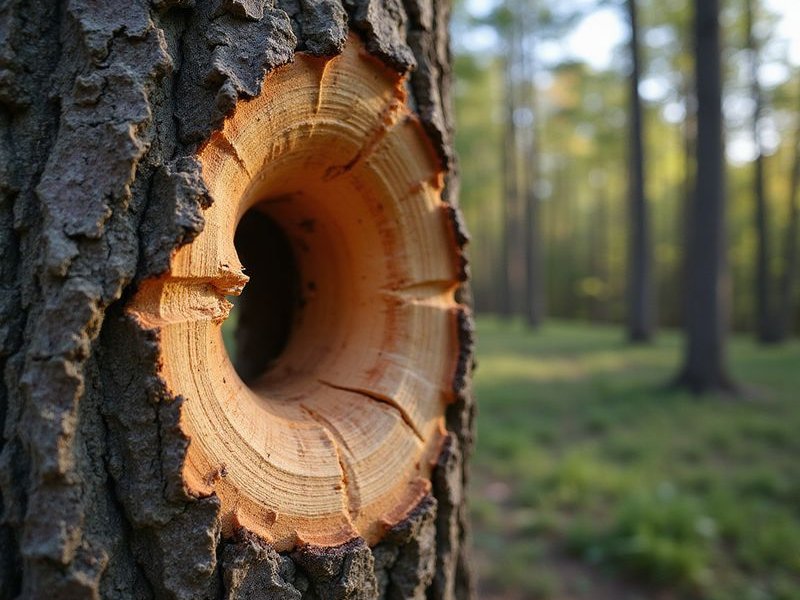
Adult beetles emerge through distinctive D-shaped holes, about 1/8 inch in diameter. These holes are a definitive sign of EAB presence—no other pest creates this exact shape.
Canopy Dieback
Infestation typically causes death starting at the top of the tree. Look for:
- Thinning crown with reduced leaf density
- Dead branches in the upper third of the canopy
- Leaves smaller than normal
Bark Splitting
As larvae feed, they create galleries just beneath the bark. Heavy feeding causes the bark to split, revealing the S-shaped galleries underneath.
Epicormic Sprouting
Stressed trees often produce sprouts along the trunk and major branches—a survival response to canopy loss. Heavy sprouting on ash is a warning sign.
Woodpecker Activity
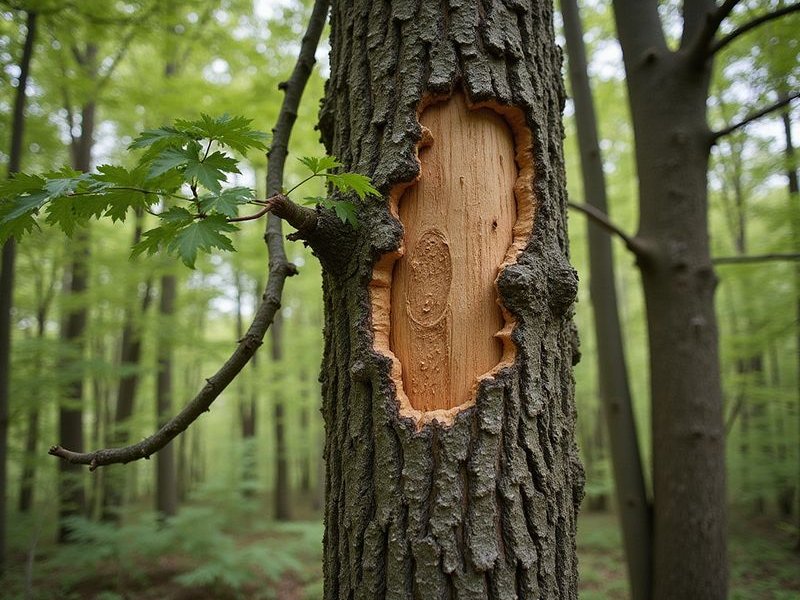
Woodpeckers feed on EAB larvae. Increased woodpecker activity on ash trees—especially large patches of stripped bark—often indicates heavy infestation.
Serpentine Galleries
If you remove a piece of bark from an infested tree, you’ll see the distinctive S-shaped feeding galleries packed with fine sawdust.
Assessment and Recommendation Process
Professional Assessment
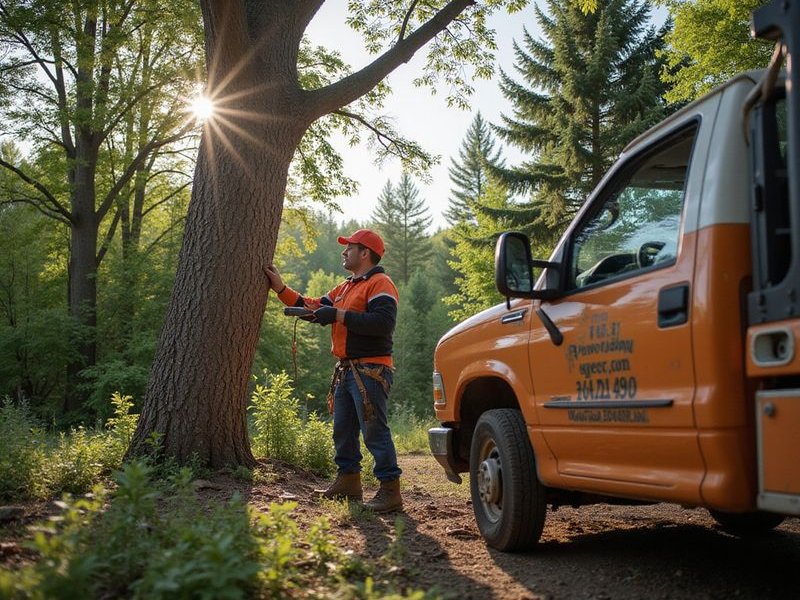
Our ISA Certified Arborist examines your ash trees to:
- Confirm ash species identification
- Check for signs of EAB infestation
- Assess overall tree health and structure
- Evaluate location and risk factors
- Estimate percentage of canopy loss
Honest Recommendations
Based on the assessment, we provide straightforward advice:
Treatment Recommended When:
- Less than 30% canopy loss
- Tree is structurally sound
- Tree has significant value (shade, aesthetics, property value)
- Owner commits to ongoing treatment schedule
Removal Recommended When:
- More than 50% canopy loss
- Structural problems (decay, lean, cracks)
- Tree location makes failure hazardous
- Treatment cost exceeds tree value
Monitor and Decide:
- Trees with 30-50% decline may go either way
- Location and risk factors influence recommendation
- Owner preferences and budget considered
We don’t push treatment on trees that won’t survive it, and we don’t rush removal when treatment makes sense. Read our complete analysis of whether to treat or remove your ash tree.
Treatment Options
For viable ash trees, systemic insecticides can provide protection:
Trunk Injection
The most effective option for large trees:
- Insecticide injected directly into trunk
- Transported throughout tree via sap flow
- Kills larvae feeding on treated tissue
- Lasts 2-3 years depending on product
- No spray drift or environmental exposure
Soil Injection or Drench
For smaller trees:
- Insecticide applied to soil at base
- Absorbed by roots and transported through tree
- May take longer to reach full effectiveness
- Less expensive than trunk injection
Treatment Schedule
- Trees in infested areas need treatment every 2-3 years
- Begin treatment before heavy infestation for best results
- Once started, treatment must continue indefinitely
- Stopping treatment leaves tree vulnerable again
Treatment Costs
Treatment costs vary by tree size and method. A large ash may cost $200-$400 per treatment cycle. Over a tree’s lifespan, this can add up—but it’s often less than removal and replacement, especially for high-value trees.
When Removal is the Answer
Some ash trees are better removed than treated:
Safety Concerns
EAB-killed ash trees become brittle and unpredictable. Dead branches may fall without warning. Delaying removal of heavily infested trees increases hazard and removal cost.
Beyond Saving
Trees with more than 50% canopy loss rarely recover even with treatment. The internal damage is too extensive. Treatment becomes money spent on an inevitable removal.
Poor Location
An ash tree overhanging your house or growing into power lines may be better removed regardless of EAB, eliminating both the pest and the location problem.
Proactive Removal
In some cases, removing healthy ash trees proactively makes sense—especially if:
- You plan to remove them eventually anyway
- Treatment commitment isn’t feasible
- Replacement trees need time to establish
After Removal: Replanting
When ash trees are removed, consider replanting with EAB-resistant species:
Native Alternatives:
- Red maple (Acer rubrum)
- Sugar maple (Acer saccharum)
- Northern red oak (Quercus rubra)
- Bur oak (Quercus macrocarpa)
- Paper birch (Betula papyrifera)—though watch for bronze birch borer
Diversity is Key:
- Don’t replace ash monocultures with another monoculture
- Mix species for resilience against future pests
- Choose trees suited to your site conditions
Our arborist can advise on species selection based on your property’s characteristics.
EAB Regulations
Minnesota has quarantines restricting movement of ash wood and debris:
- Don’t transport firewood from infested areas
- Ash wood from removals should stay local
- We handle all debris in compliance with regulations
Take Action Now
If you have ash trees, don’t wait for obvious decline to act:
- Get an Assessment: Know what you have and its current condition
- Make a Plan: Decide which trees to treat, monitor, or remove
- Start Treatment Early: Treatment works best before heavy infestation
- Budget for Removal: Plan financially for trees that can’t be saved
Call (218) 555-0391 to schedule your ash tree assessment. Early action gives you the most options.