Why Tree Topping Is Bad for Your Trees (And What to Do Instead)
Tree topping weakens structure and invites disease. An ISA Certified Arborist explains why proper crown thinning is the safe alternative.
We often spot a specific problem while driving through local neighborhoods. Trees that once provided shade and beauty suddenly look like hat racks with stripped branches.
You might think cutting a tree back this drastically reduces the risk of falling limbs during a storm.
The reality is usually the exact opposite.
We find that this practice actually creates a significantly higher risk for your property over time.
This guide breaks down exactly why this common technique fails and outlines the specific, science-based alternatives we use to keep Duluth trees safe and healthy.
What Is Tree Topping?
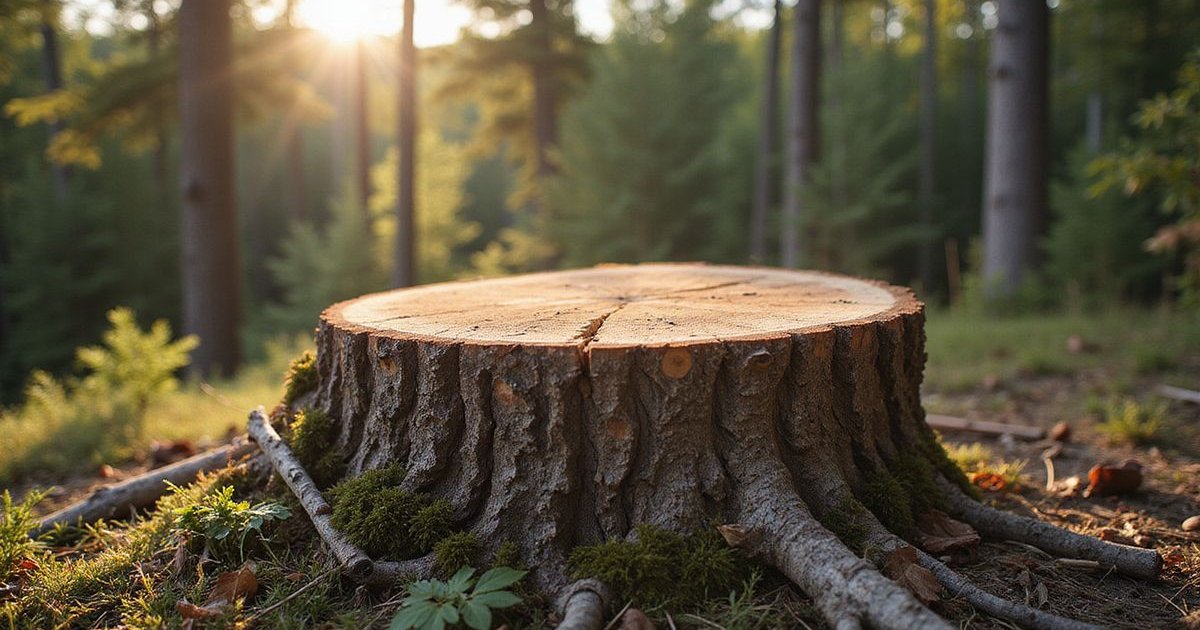
Topping is the indiscriminate cutting of tree branches to stubs or to lateral branches that are not large enough to assume the terminal role.
We see it frequently, yet it violates the ANSI A300 pruning standards used by professional arborists across the United States.
The process involves shearing off the upper canopy without any regard for the tree’s biological structure.
Other common names for this damaging practice include:
- Heading
- Tipping
- Rounding over
- Hat-racking
The intent is usually to lower the height of a tree or “open it up” for a view.
Damage occurs instantly regardless of the terminology used.
Why Topping Is Harmful
It Removes the Tree’s Food Factory
Trees rely on their leaves to produce the starches and energy they need to survive.
We have seen topping remove 50% to 100% of a tree’s leaf-bearing crown in a single afternoon.
The tree suddenly loses its ability to convert sunlight into food.
This triggers a starvation mechanism that forces the tree to burn through its stored energy reserves just to stay alive.
It Triggers Weak Regrowth
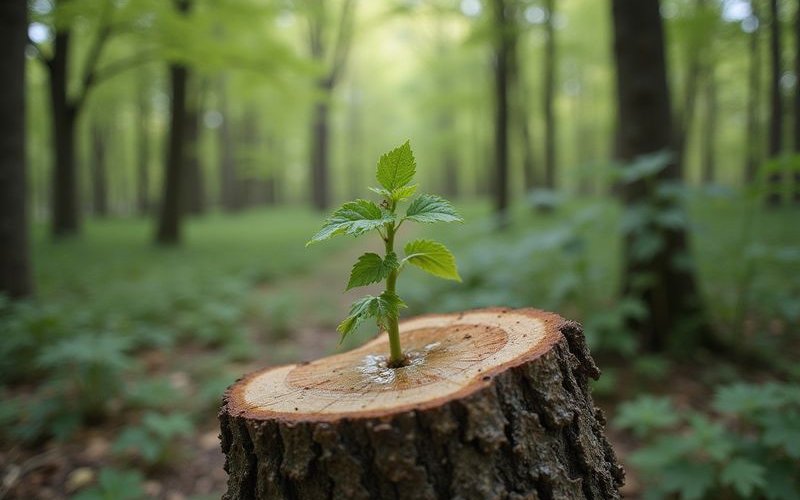
A topped tree does not stop growing.
It responds with a panic reaction known as epicormic sprouting.
Dozens of thin, whip-like shoots explode from the cut stubs in a desperate attempt to replace the lost leaves.
These “water sprouts” are dangerous for several reasons:
- Rapid Growth: They can grow up to 10 feet in a single year.
- Weak Attachment: Unlike normal branches that are anchored into the socket of the trunk, these sprouts adhere only to the surface layers.
- Pop-Out Failure: The weight of these new shoots often causes them to rip out of the tree during high winds or heavy snow.
We often see topped trees regain their original height within two years, but with a crown that is structurally unsafe.
It Opens the Tree to Decay
Large pruning wounds act as an open door for bacteria, fungi, and insects.
A tree possesses a natural defense mechanism called compartmentalization to seal off small, clean cuts.
Topping leaves massive, crushed stubs that are too large for the tree to seal effectively.
Rot typically enters these wounds and moves down the branch columns into the main trunk.
It Causes Sunscald
The sudden removal of the leaf canopy exposes the remaining bark to direct sunlight.
We compare this to a human getting a severe sunburn.
The tissues beneath the bark can die, leading to large cankers and splitting bark that further weaken the tree’s structure.
It Increases Liability Risks
A topped tree is a hazardous tree.
Insurance companies may view topping as negligence because it goes against accepted industry standards.
If a branch from a tree you topped fails and damages a neighbor’s property, you could be held fully liable for the damages.
It’s Ugly
A topped tree loses its natural character and silhouette.
The regrowth appears as a dense, unnatural broom-like cluster that ruins the landscape aesthetic.
Real estate studies suggest that healthy, mature trees increase property value, while disfigured trees can lower it.
Why Do People Top Trees?
The decision usually stems from misinformation or fear.
Here are the most common justifications we hear, along with the reality of the situation:
“The tree was too tall.” Height is a valid concern near power lines or structures. However, topping only controls height temporarily before the fast-growing water sprouts shoot up even higher than before. Proper crown reduction controls height without triggering the panic growth.
“I wanted more light.” Topping opens the canopy for a brief period. The resulting dense cluster of water sprouts will eventually block more light than the original canopy did. Crown thinning is the correct method to increase light penetration.
“A tree service recommended it.” Some operators top trees because it is fast work that requires no technical skill. They get paid quickly, while you are left with the long-term problems.
“My neighbor did it.” Bad examples are contagious in residential areas. Following the lead of a neighbor often results in shared liability and damaged landscapes.
What to Do Instead
We use specific, industry-approved techniques to achieve your goals without harming the tree.
Comparison: Topping vs. Proper Pruning
| Feature | Tree Topping | Proper Crown Reduction |
|---|---|---|
| Technique | Indiscriminate cutting to stubs | cutting to a lateral branch |
| Regrowth | Fast, weak, and dense | Controlled and natural |
| Tree Health | Causes decay and starvation | Maintains health and structure |
| Cost | Cheap upfront, expensive later | Higher skill, lower long-term cost |
Crown Reduction
Proper reduction decreases the height or spread of a tree.
We look for a lateral branch that is at least one-third the diameter of the limb being removed.
This “leader” takes over the growth role, which prevents the tree from sending out panic sprouts.
The benefits include:
- Reduced wind resistance
- Maintained structural integrity
- A natural appearance
Crown Thinning
This technique allows wind and light to pass through the canopy.
We selectively remove branches from the interior of the crown rather than the tips.
This reduces the weight on heavy limbs and lowers the risk of storm damage.
Crown Cleaning
This is the standard maintenance pruning every tree needs.
Our arborists focus on removing three specific types of wood:
- Dead or dying branches
- Diseased wood
- Broken or structurally weak limbs
Removal
Sometimes the wrong tree was planted in the wrong place.
We may recommend removal if a tree has outgrown its space and cannot be reduced safely.
Replacing a large, dangerous tree with a smaller, more appropriate species is often the most cost-effective long-term solution.
How to Avoid Hiring a Topper
You can spot an unqualified tree service by asking a few specific questions.
Ask about “topping.” Listen carefully to their answer. A professional will immediately explain why they do not top trees and offer an alternative.
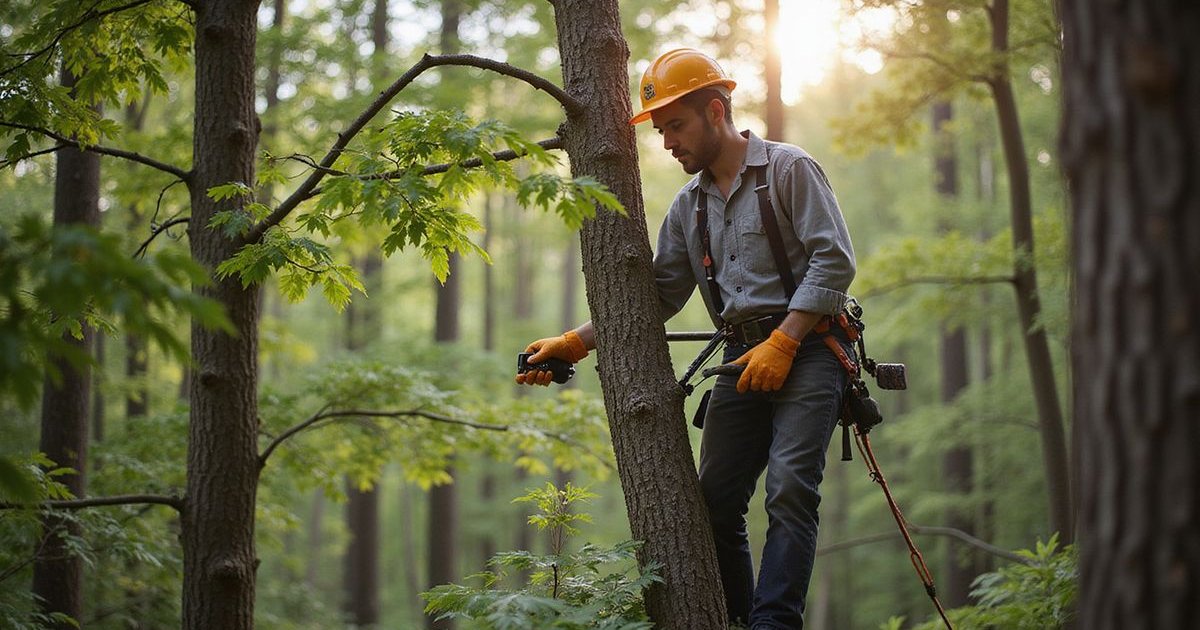
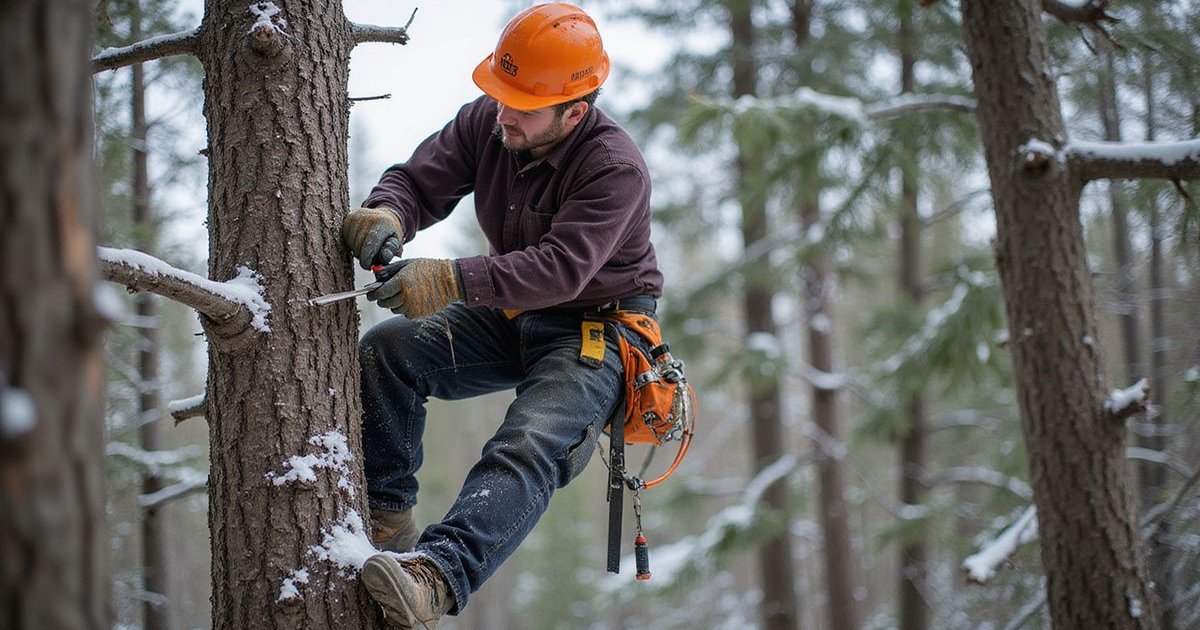
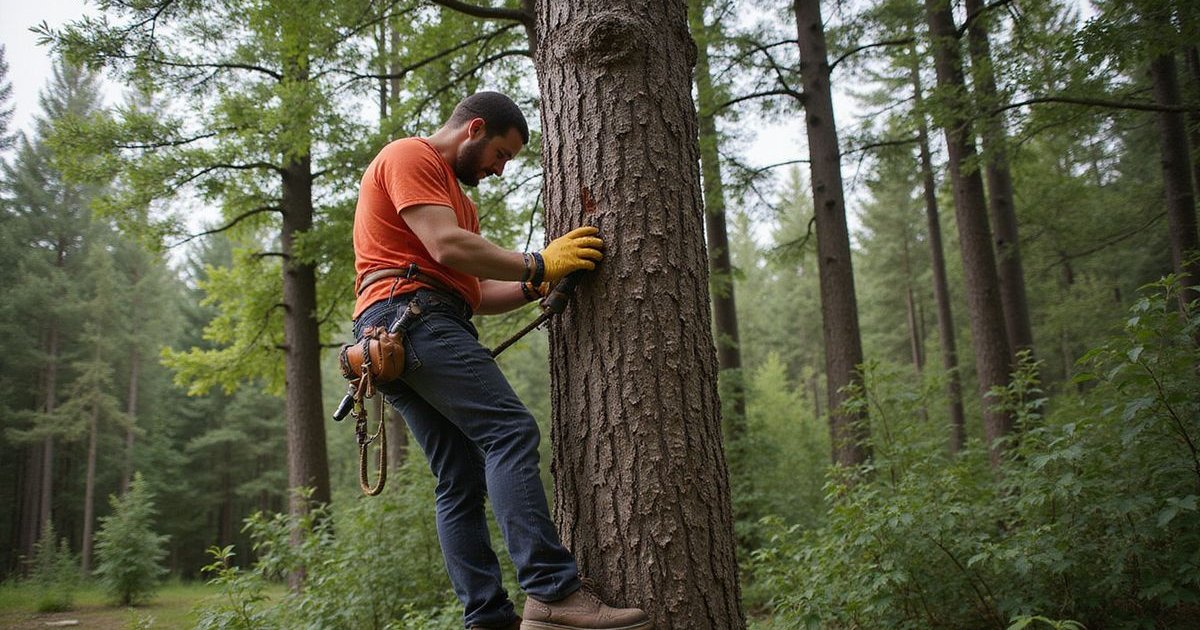
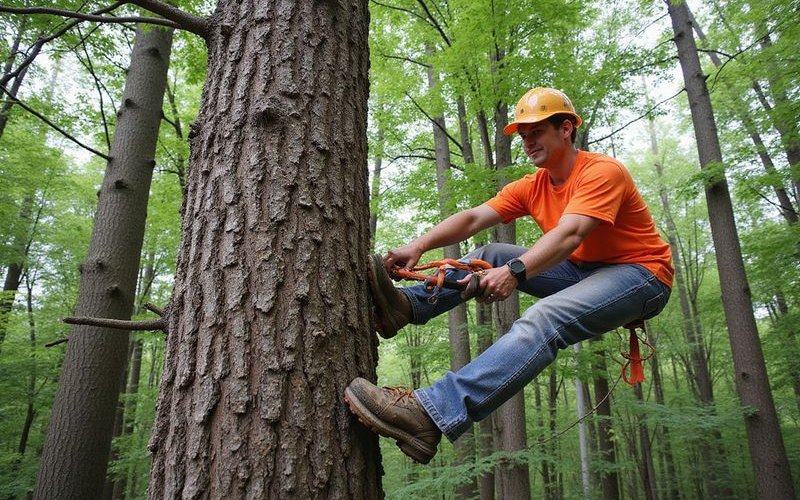
Check for climbing spikes. Ask if they use “spikes” or “gaffs” to climb the tree. Legitimate arborists only use spikes during a removal, never on a tree being pruned, as the spikes cause damaging wounds.
Look for credentials. Ask to see their ISA (International Society of Arboriculture) certification. Certified arborists have passed exams demonstrating they understand tree biology and proper pruning standards.
Verify insurance. Request a certificate of insurance directly from their provider. This protects you from lawsuits if a worker is injured on your property.
Can a Topped Tree Be Fixed?
The answer depends on the severity of the damage.
We can sometimes implement a restoration plan if the tree has enough energy reserves remaining.
This process is not a quick fix.
It involves a multi-year strategy:
- Year 1: We remove the dead stubs and select the strongest water sprouts to become new leaders.
- Year 3-5: We suppress the competing sprouts and encourage the new structure to harden.
- Year 5+: We continue to thin the crown to restore a natural shape.
Restoration is labor-intensive and more expensive than doing the job right the first time.
Trees that have been topped repeatedly or show signs of advanced decay often require removal for safety reasons.
The Bottom Line
Tree topping creates an immediate hazard and a long-term financial burden.
It reduces the lifespan of your trees and increases the likelihood of property damage from failure.
Your trees deserve care that respects their biology and structural integrity.
If you are dealing with a topped tree or want to prune an overgrown tree safely, we can help you assess the best path forward.
Have questions about proper pruning for your trees? Our tree trimming and pruning service follows ISA-approved techniques. Call (218) 555-0391 for a proper assessment—and it won’t be topping.
Erik Janssen
ISA Certified Arborist serving Duluth and the North Shore since 2016. Dedicated to professional tree care and honest advice.