A Tree Fell on Your House: What to Do Next (Step by Step)
Emergency steps when a tree falls on your Duluth home. Safety, insurance documentation, and how to get professional storm damage removal.
A Tree Fell on Your House: What to Do Next (Step by Step)
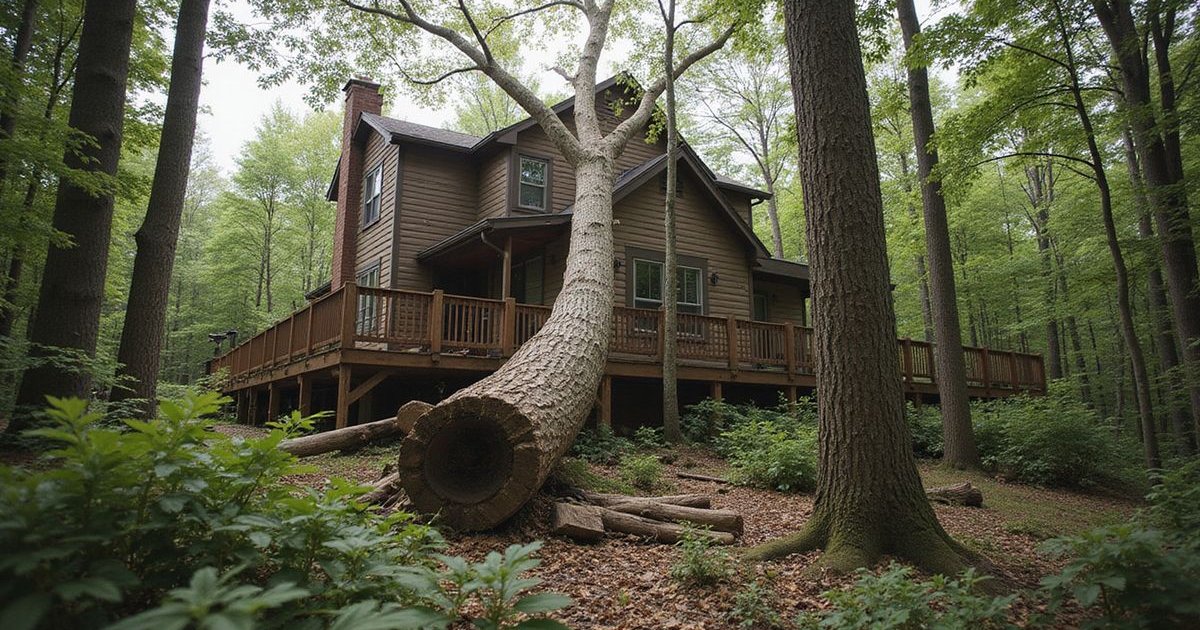
The crash woke you up at 2 AM. A tree—your tree or your neighbor’s—is now on your roof. It’s dark, it’s raining, and you don’t know what to do next.
From what we’ve seen responding to storms across the US, the difference between a quick recovery and a months-long nightmare often comes down to the decisions made in the first hour. Most homeowners panic and start moving things they shouldn’t, or worse, they wait too long to call the right people.
Here is the exact protocol we use and recommend for handling this emergency, from the initial safety check to the final insurance payout.
Step 1: Ensure Everyone’s Safety (First 5 Minutes)
Account for everyone in the house. Make sure all family members are accounted for and uninjured.
Get out if there’s structural damage. If the tree penetrated the roof, walls, or ceiling—if you can see sky from inside—evacuate the building. The structure may be compromised.
Respect the “10-Foot Rule” for power lines. If the tree hit power lines or the electrical service drop, assume every wire is live. OSHA regulations for 2025 strictly warn non-qualified individuals to stay at least 10 feet away from any energized conductor. Do not touch the tree, the wires, or anything in contact with them—including metal fences that might be energized by a downed line yards away. Call 911 immediately if lines are down.
Stay away from the damage zone. The tree may shift. Broken branches, often called “widowmakers” by pros, may still be hanging loosely and can fall without warning. Keep everyone at a safe distance until you can assess in daylight.
If there’s immediate danger (fire, the smell of rotten eggs indicating a gas leak, or structural collapse), call 911.
Step 2: Prevent Further Damage (First Hour)
Once immediate safety is confirmed:
Cover the breach if possible. If rain or snow is entering through a hole in the roof and you can safely access it, cover the opening with a heavy-duty tarp (ideally 6-mil thickness or higher). But don’t climb on a compromised roof structure or get near the tree.
Turn off utilities if necessary. If the tree damaged your electrical panel, water lines, or gas service, shut them off at the main. If you smell mercaptan (the additive in natural gas), leave immediately and call the gas company from outside.
Move valuables away from the damage area. Water will continue entering until repairs are made. Move furniture, electronics, and personal items away from the breach to a dry room or garage.
Step 3: Document Everything (Within Hours)
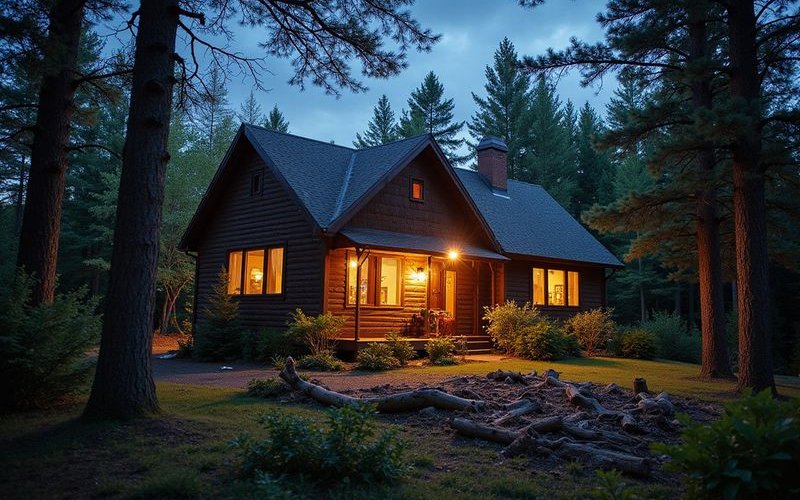
Before anyone touches the tree, document the damage thoroughly.
In Q2 of 2024 alone, wind and hail accounted for 57% of property claims, meaning adjusters are often overwhelmed and rely heavily on the photos you provide.
Take photos from multiple angles:
- Wide shots showing the tree and house together.
- Close-ups of where the tree contacts the structure.
- Interior damage (ceiling, walls, floors).
- Any damaged personal property.
- The tree’s original location (stump, root plate if uprooted).
Look for “bright fractures.” Forensic engineers often look for fresh, bright-colored wood at the break point to prove storm damage versus old rot. Get clear close-ups of these splintered areas to prove the damage is recent.
Take video walking around the damage, narrating what you’re seeing.
Note the date, time, and weather conditions when the tree fell.
This documentation is critical for your insurance claim. Take more photos than you think you need.
Step 4: Contact Your Insurance Company (Same Day)
Call your homeowner’s insurance company as soon as possible—ideally within 24 hours. Most policies cover tree damage to structures, but the limits for removal have changed recently.
What You Need to Know About Coverage in 2026
Standard Structural Coverage: This pays to repair the house, garage, and other structures. It typically also covers the cost to get the tree off the house so repairs can happen.
Debris Removal Sub-Limits: Many modern policies have a specific cap for hauling the tree away after it’s off the house. In 2025, we frequently see this capped at $500 to $1,000 per tree. Since removal can cost more, you might pay some out-of-pocket costs for the haul-away portion.
| Expense Category | Typically Covered? | 2025/2026 Common Limits |
|---|---|---|
| Tree Removal from Structure | Yes | Part of structural coverage limit |
| Debris Haul-Away | Limited | Often capped at $500 - $1,000 |
| Stump Grinding | No | Usually excluded unless specified |
| Neighbor’s Tree Removal | Yes | Covered if it hits your structure |
Document your conversations: Note who you spoke with, when, and what they said. Get a claim number immediately.
Step 5: Call for Emergency Tree Removal
You need a professional tree service to safely remove the tree from your house. This is not a DIY job.
Why professional removal is essential:
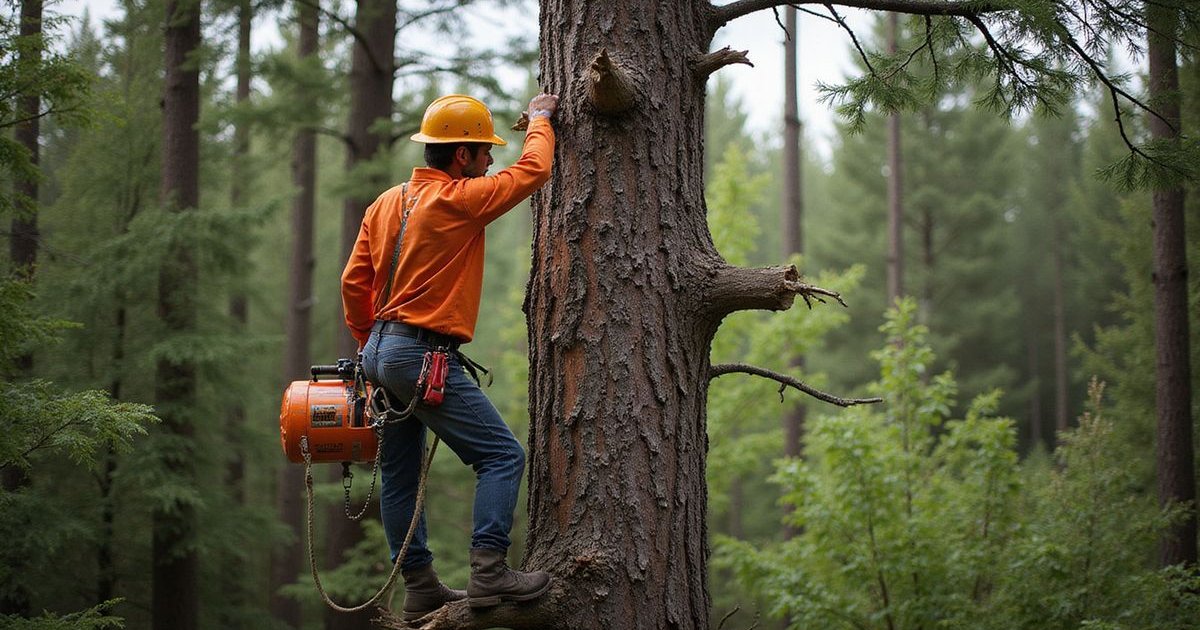
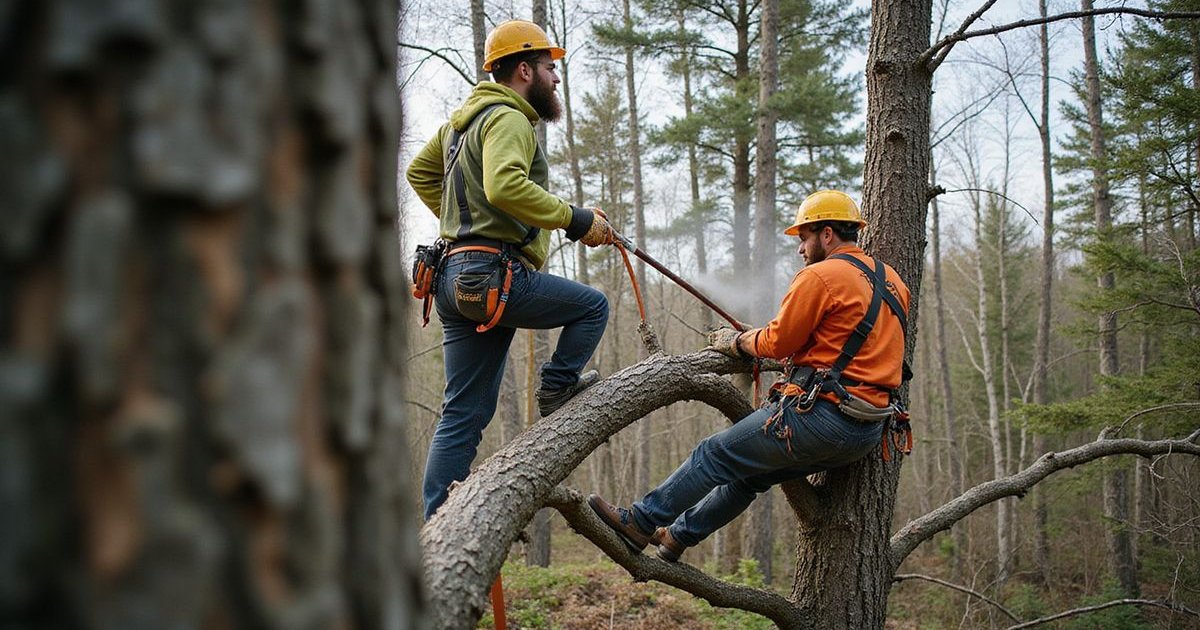
- Calculated Rigging: We use “negative rigging” techniques to lift heavy wood up and away from the roof, rather than letting it drop and causing more damage.
- Crane Requirements: Large trees often require a 30-to-100-ton crane to lift sections safely.
- Cost Realities: Emergency removal is specialized. While standard removal averages $750-$1,200, emergency work in 2025/2026 typically ranges from $1,000 to $3,500+ depending on risk and equipment.
When you call, ask:
- Can you respond today/tonight?
- Do you have an ISA Certified Arborist on staff?
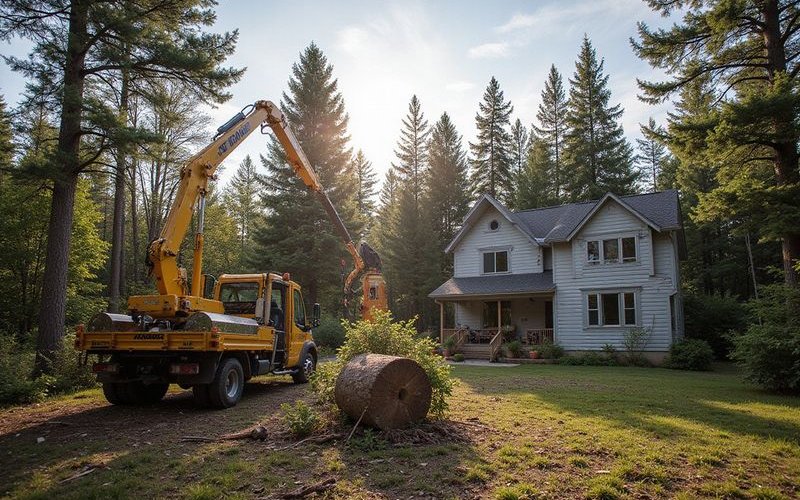
- Do you use a crane with a grapple saw? (This allows for remote cutting, keeping workers off your unstable roof).
- Can you tarp the roof after removal?
We provide 24/7 emergency response for storm damage. Call (218) 555-0391 any time for immediate assistance.
Step 6: Work with the Insurance Adjuster
Your insurance company will send an adjuster to assess the damage. Before they arrive:
Make temporary repairs to prevent further damage (tarps, board-ups), but keep receipts—these costs are typically reimbursable under “mitigation” clauses.
Don’t make permanent repairs until the adjuster has documented the damage.
Have your documentation ready: photos, video, receipts, timeline of events.
Get written estimates for tree removal and structural repair. Having these ready helps the adjuster approve the “scope of loss” faster.
Be present for the inspection. Walk with them. Point out the “bright fractures” and specific damage areas you found earlier.
Step 7: Understand the Removal and Repair Process
Tree Removal
Removing a tree from a structure is careful work:
- Stabilization: The tree is secured with ropes or cables to prevent shifting.
- Sectioning: We remove branches starting from the tips, working inward.
- Lifting: Each piece is cut and lifted via crane or rigging lines.
- Extraction: The trunk is carefully lifted off the structure.
- Tarping: The crew installs a temporary weather barrier.
This can take several hours for a large tree. The crew needs space to work safely, often requiring the driveway or street access.
Structural Repair
A separate contractor handles structural repair:
- Assessment of damage extent (may be worse than visible).
- Roof repair/replacement.
- Interior repairs (ceiling, walls, insulation).
- Mold prevention if water entered.
Insurance typically covers all of this, minus your deductible.
Common Questions
What if it’s my neighbor’s tree?
If a neighbor’s tree fell on your house, your insurance usually pays the claim. Your insurance company may then pursue “subrogation” (seeking reimbursement) from the neighbor’s insurer if there is proof of negligence, but that happens behind the scenes. You file with your carrier first.
What if the tree just fell in the yard?
Trees that fall without hitting structures are often not covered for removal. Check your policy for “Debris Removal” coverage. If it exists, it is usually a small amount (e.g., $500) to help clear the driveway.
What if the tree was clearly dead before it fell?
Insurance may deny claims if the tree was a known hazard and maintenance was neglected (“negligence”). This is why those photos of the wood condition matter. If the wood inside the break is fresh and bright, it argues against the negligence claim.
How long does this process take?
- Emergency tree removal: Same day to 48 hours.
- Insurance adjuster visit: 1-5 days.
- Temporary weatherproofing: During/immediately after removal.
- Permanent repair: Weeks to months depending on contractor availability and material lead times.
Prepare Before It Happens
The best time to handle a tree emergency is before it happens:
Know your insurance coverage. Review your policy now. Check your “Debris Removal” limits specifically.
Have emergency numbers ready. Save the numbers for a local tree service and your insurance claims hotline in your phone.
Identify hazard trees. Look for fungal conks (mushrooms) at the base of trees or “co-dominant stems” (V-shaped trunks). These are weak points that fail in storms.
Photograph your property. Current photos showing trees and structures help document “before” condition for claims.
24/7 Emergency Response
When a tree is on your house, you need help fast. Our emergency storm damage service responds to storm emergencies day and night throughout the Duluth-Superior area.
Call (218) 555-0391 for immediate emergency tree removal. We’ll stabilize the situation, remove the tree safely, and help you get your home back to normal.
Erik Janssen
ISA Certified Arborist serving Duluth and the North Shore since 2016. Dedicated to professional tree care and honest advice.