What Happens If You Leave a Tree Stump in Your Yard?
Left alone, tree stumps attract insects, grow fungi, and create tripping hazards. Learn why stump grinding is worth the investment.
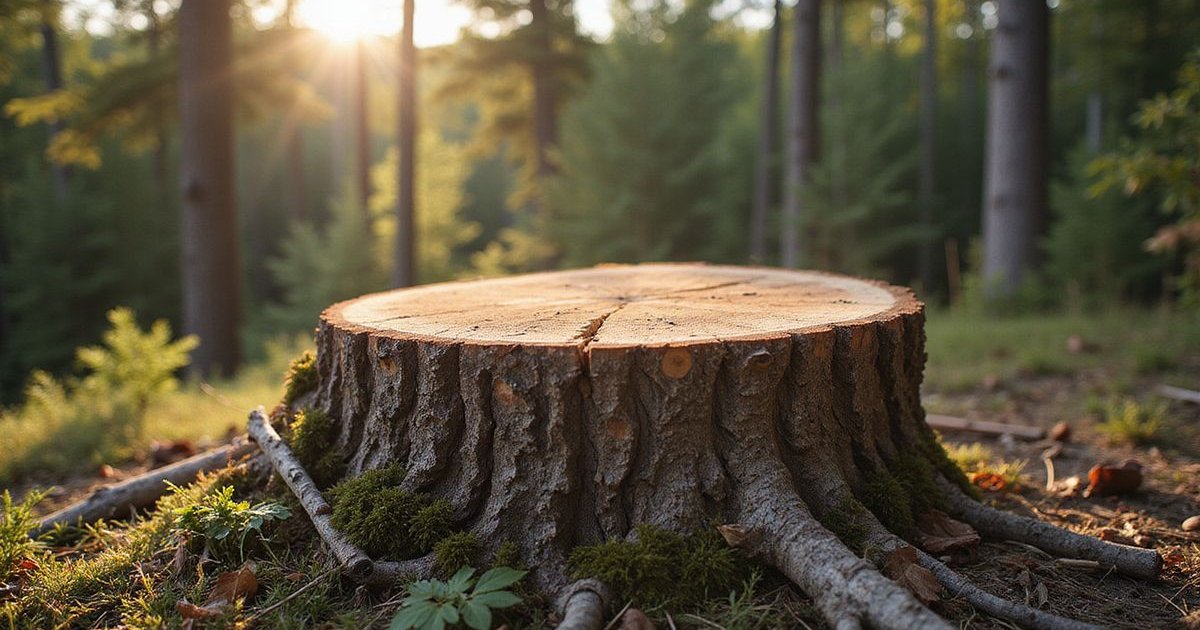
After a tree comes down, many homeowners stare at the leftover stump and wonder if they really need to grind it out. We often see clients hesitate because the immediate problem of the precarious tree is gone. The stump seems like a minor annoyance that can be ignored to save a few dollars.
But from our experience working with property managers and real estate agents, that stump is rarely just a cosmetic issue. It typically marks the beginning of a new, slower set of problems that are harder to see until they become expensive.
Here is the breakdown of what actually happens in your yard when a stump is left behind, based on the biology of decay and the data we use in the field.
The Science of the Slow Decay Process
A tree stump will not disappear in a few seasons. Natural decomposition is a biological process that relies on density, moisture, and fungal activity.
Softwood stumps (pine, spruce, birch): These less dense woods rot faster, typically clearing in 7-12 years.
Hardwood stumps (oak, maple, ash): These are the real challenge. Because their wood density is significantly higher (often double that of softwoods), they can remain solid for 15-20+ years.
You are effectively committing to mowing around a rotting obstacle for the next two decades.
Problem #1: A Launchpad for Insect Colonies
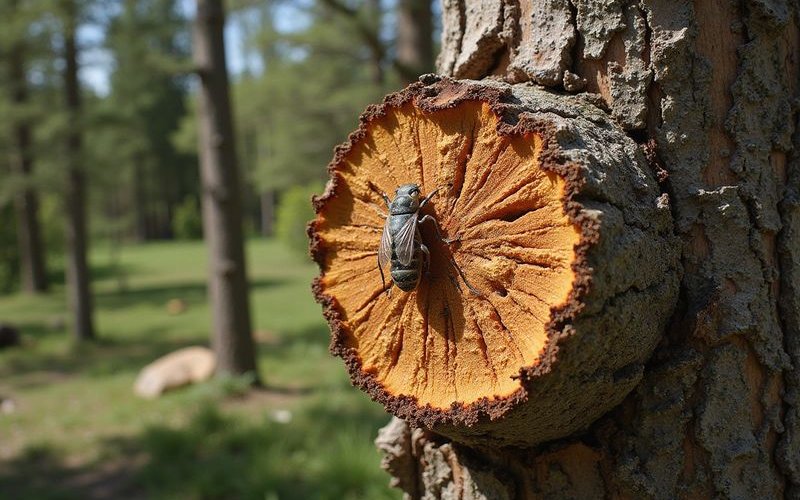
Rotting wood is a biological beacon for wood-boring insects. We find that a stump acts as a “beachhead” for pests to establish themselves before moving toward your home.
Carpenter Ants
These are the most common issue we encounter. They do not eat the wood; they hollow it out to build nests.
- The Threat: A stump often serves as a “parent colony.”
- The Reach: Research shows that carpenter ants establish “satellite nests” up to 100 yards away from their main colony. If your stump is within a football field’s distance of your house, your framing is within their foraging range.
Termites
While less aggressive in northern climates, termites are a serious risk.
- The Bait: Subterranean termites are constantly foraging for cellulose. A damp, rotting stump connects directly to the soil, creating an ideal entry point.
- The Progression: Once a colony is established in the stump, the population pressure forces them to seek new food sources, often leading them to nearby fences or your home’s foundation.
Wood-Boring Beetles
You might see small holes appearing in the stump.
- The Cycle: Powderpost beetles and longhorned beetles lay eggs in the decaying fiber.
- The Impact: While they rarely jump to treated lumber in a house, they increase the local population of pests that attract woodpeckers and other predators to your yard.
Problem #2: The Hidden Spread of Fungal Disease
This is the issue most homeowners miss until it is too late. As stumps decay, they become hosts for fungi.
Honey Fungus (Armillaria): This is the one that concerns us most. It produces “shoestring” structures called rhizomorphs that grow through the soil.
- The Spread Rate: These rhizomorphs can advance through the soil at a rate of 3 to 8 feet per year.
- The Danger: They hunt for living roots. We have seen Armillaria spread from a rotting stump to kill healthy birch, maple, and oak trees nearby.
Hazardous Mushrooms:
- Toxicity: Species that fruit on rotting wood can be toxic to dogs and toddlers.
- Spores: Windblown spores from these mushrooms can infect other stressed trees in your landscape.
Problem #3: The “Zombie” Tree Phenomenon (Suckering)
Many species do not accept death quietly. The root system remains alive and fueled by stored energy, pushing up new growth called suckers.
High-Risk Species for Suckering:
- Poplars and aspens
- Willows
- Silver maples
- Tree of heaven (Ailanthus)
- Black locust
Why Cutting Them Doesn’t Work: You might try lopping these off, but that often stimulates more growth. We recommend applying a systemic herbicide immediately after a fresh cut if you cannot grind the stump.
- Pro Tip: Avoid general weed killers like glyphosate (Roundup) for woody suckers. We see better results with Triclopyr, which is specific to woody plants and less likely to kill your surrounding grass.
Problem #4: Liability and Insurance Risks
A stump is a trip-and-fall accident waiting to happen. We often discuss this with clients who have elderly relatives or active children.
The Negligence Factor: If a guest trips over a stump you knew was there, you could be held liable for their injuries.
- The Degradation: Over time, the center of the stump rots out, creating a hidden hole that can twist an ankle easily.
- Snow Cover: In winter, a 6-inch stump disappears under snow, becoming a hard, invisible obstacle for anyone walking across the lawn.
Insurance adjusters look for “known hazards” when assessing claims. Removing the stump eliminates this liability entirely.
Problem #5: Curb Appeal and Property Value
Stumps are visually unappealing. They signal “deferred maintenance” to anyone looking at your property.
The Real Estate Perspective:
- First Impressions: A front yard with a stump looks unfinished.
- Usable Space: You lose square footage for patios, gardens, or play areas.
- Planting Limits: You cannot plant a new tree in the same spot until the old root ball is ground out and the soil is rehabilitated.
Why “Natural Decay” Tactics Rarely Work
Homeowners often try to speed up nature to avoid the cost of grinding. We have seen the results of these experiments, and they are usually disappointing.
Potassium Nitrate (Stump Remover):
- The Promise: Chemical granules that soften the wood.
- The Reality: It takes 4-6 weeks just to start the softening process. You still have to chop out the wood manually. It accelerates rot, but “fast” in this context still means years, not weeks.
Burning:
- The Risk: Damp wood does not burn well. You usually end up with a charred, black stump that is even uglier than before.
- The Law: Many municipalities strictly ban open burning of landscape waste due to smoke and fire risk.
Epsom Salt:
- The Myth: A popular online hack.
- The Result: It eventually dries out the stump, but it takes a massive amount of salt and a very long time.
Comparison: Professional Grinding vs. DIY Rental vs. Ignoring It
We built this comparison to help you weigh the true costs of your options.
| Feature | Professional Grinding | DIY Rental (Home Depot/Lowe’s) | Leaving the Stump |
|---|---|---|---|
| Average Cost | $150 - $400 | $150 - $300 (per day) + Fuel/Trailer | $0 (Initial) |
| Time Required | 1 Hour | 4-8 Hours (Plus pickup/dropoff) | 0 Hours |
| Physical Effort | None | High (Heavy machinery, vibration) | Moderate (Mowing around it) |
| Depth | 6-12 inches below grade | Often limited to 3-6 inches | Above grade |
| Long-Term Risk | None | Low | High (Pests, Fungi, Liability) |
The Rental Warning: If you rent a grinder, be aware that the small, walk-behind units (often 10-15 HP) available at big-box stores are underpowered for hardwoods. We have seen homeowners spend an entire Saturday vibrating their arms numb to grind one oak stump.
When Is It Okay to Leave a Stump?
There are a few specific scenarios where we tell clients they can skip grinding:
- Wooded Acreage: If the stump is in a back forest where no one walks, let it rot. It provides a habitat for beetles and woodpeckers.
- Stabilization: On a steep, unstable bank, the old roots can help hold soil while new vegetation takes hold (though they will eventually rot).
- Rustic Design: If you plan to hollow it out for a planter, just ensure it is far enough from your house to avoid pest issues.
The Bottom Line
For the vast majority of residential properties, stump grinding is the only permanent solution. It closes the chapter on the tree removal, protects your home from pests, and instantly reclaims your yard.
Ready to deal with that stump? Call (218) 555-0391 for a free grinding estimate. We can usually grind stumps the same day as tree removal, saving you a second service call.
Erik Janssen
ISA Certified Arborist serving Duluth and the North Shore since 2016. Dedicated to professional tree care and honest advice.