Stump Grinding vs. Stump Removal: What's the Difference?
Stump grinding and stump removal are different services with different costs. Learn which option is right for your Duluth property.
After a tree comes down, the stump is often the last thing on a homeowner’s mind until the saw shuts off. Then you’re staring at an ugly wooden obstacle and asking, “Can you just grind that out?”
We get that question every day. But while grinding is the most popular option, it isn’t always the right one.
There is a massive difference between shaving a stump down and ripping it out of the earth entirely. One leaves roots behind; the other leaves a crater.
Here is the practical breakdown of what actually happens with each method so you can decide what your yard needs.
Stump Grinding: The Fast and Affordable Choice
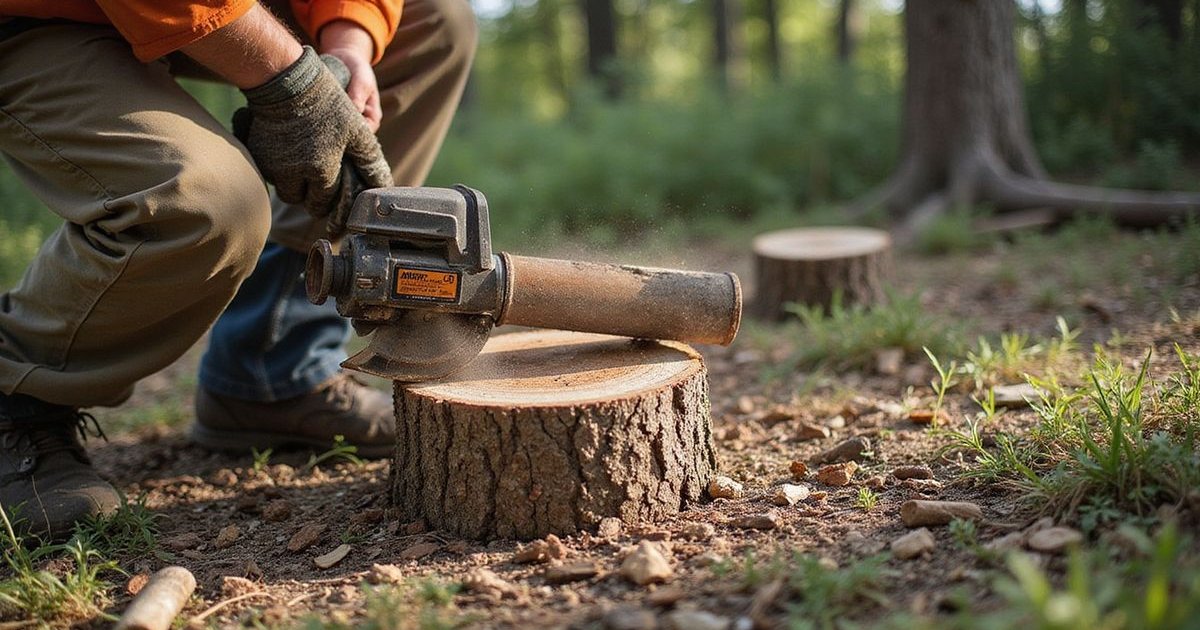
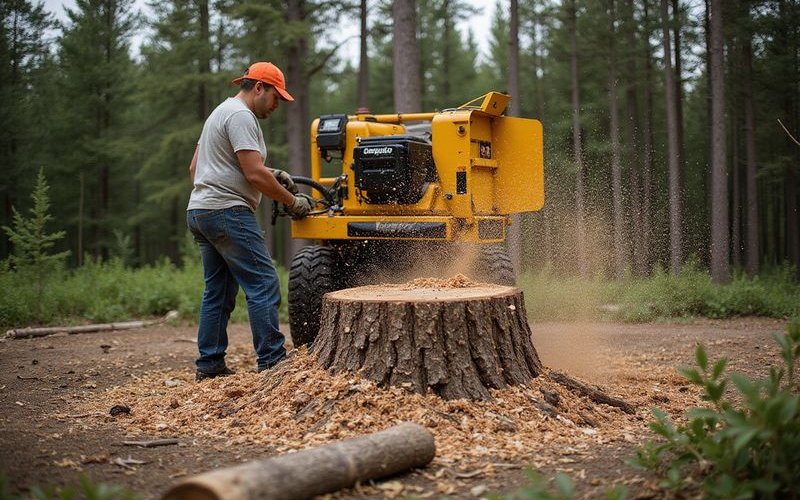
Stump grinding is the industry standard for a reason. We use a machine called a stump cutter to mechanically chew the wood into small pieces.
This process is efficient and minimally invasive. Instead of digging a massive hole, the machine uses a high-speed disk to chip the wood away until it is gone.
How the Grinding Process Works
We typically use a commercial machine like a Vermeer SC30TX. This unit is powerful enough to handle hardwoods but compact enough to fit through a standard backyard gate.
- Positioning: The grinder tracks over the lawn to the stump location.
- The Cut: A rotating wheel with carbide-tipped teeth sweeps side-to-side across the stump.
- Depth: We grind the main trunk down 4 to 12 inches below the soil line.
- Chasing Roots: Major surface roots are ground down until they are no longer visible.
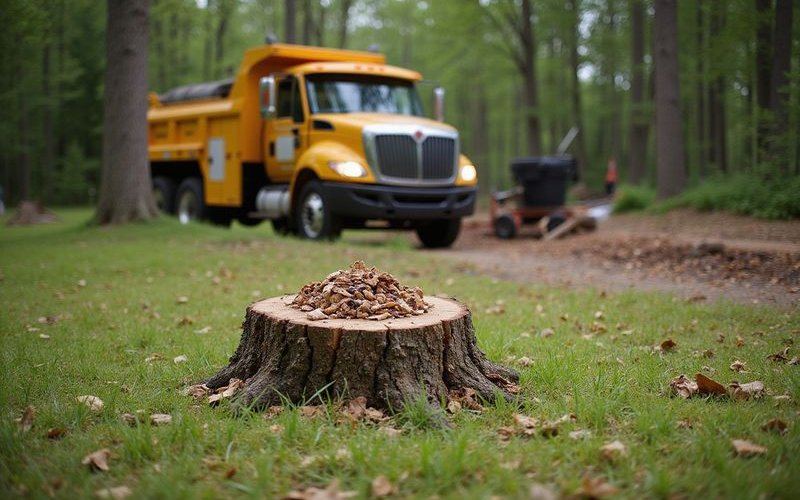
- The Fill: The resulting hole is filled with the mixture of soil and wood chips created by the grinding.
What You’re Left With
The visual result is immediate: the stump is gone. However, what lies beneath the surface is important to understand.
- A “Mulch Volcano”: You will have a pile of wood chips about 30% larger than the original stump volume.
- Buried Roots: The taproot and lateral roots remain underground and will decay naturally over 5-10 years.
- Soft Soil: As the leftover chips decompose, the ground will settle slightly over the first year.
Grinding Depth Options
Most homeowners don’t realize they can request different depths based on their future plans.
Standard Grind (4-6 inches deep): This is perfect if you just want to mow over the area. Grass can easily grow in the layer of topsoil you add over the chips.
Deep Grind (12+ inches deep): We recommend this if you plan to plant a shrub or small tree in the general vicinity. Going deeper removes more of the main root ball, giving new plantings more room to establish.
Stump Removal: The “Clean Slate” Approach
Stump removal is a heavy-duty construction project. It involves excavating the entire root ball using heavy machinery like a Bobcat or mini-excavator.
This isn’t just tree work; it is essentially earthmoving. You are removing the biological anchor that held the tree in place.
The Removal Process
We start by digging a wide trench around the perimeter of the stump to expose the major roots.
- Severing Roots: An operator uses the excavator bucket or a saw to cut thick lateral roots.
- Extraction: The machine leverages the stump out of the ground, often lifting a root ball that weighs hundreds of pounds.
- Hauling: The stump is loaded onto a truck and hauled away to a disposal site.
- Backfilling: The large void must be filled with clean fill dirt to prevent a safety hazard.
Why It Costs Significantly More
The price difference shocks some customers, but the logistics explain it.
- Heavy Equipment: We have to transport an excavator to the site, which costs more to operate than a grinder.
- Disposal Fees: Dumping a 500-pound root ball at a landfill or recycling center is not free.
- Labor Hours: A job that takes 45 minutes to grind might take 4 hours to excavate and fill.
A stump that costs $300 to grind could easily cost $900 or more to fully remove and haul away.
Comparison: Grinding vs. Removal
The choice often comes down to budget and future landscaping plans.
| Factor | Stump Grinding | Stump Removal |
|---|---|---|
| Typical Cost | $3-$5 per inch ($150 minimum) | $150+ per hour ($500+ total) |
| Time Required | 30-60 minutes | 3-5 hours |
| Yard Impact | Minimal (some sawdust) | High (heavy tracks, large hole) |
| Root System | Left to decay naturally | 90% removed |
| Pest Risk | Low (if below grade) | Zero (source removed) |
| Best For | Lawns, simple gardens | Construction, replanting same spot |
When to Choose Stump Grinding
For 90% of residential properties, grinding is the logical solution.
You want the most economical option. At roughly $3 per inch of diameter, grinding is significantly cheaper than excavation. The savings on a single large oak stump can be hundreds of dollars.
You value your lawn. Our grinders run on rubber tracks that distribute weight evenly. An excavator, by contrast, often tears up turf and compresses the soil.
You just want to grow grass. Once the stump is ground 6 inches down, you can top it with soil and seed. The grass will establish long before the buried roots rot away.
The location is tight. We can fit a grinder through a 36-inch gate. If your stump is in a fenced backyard, excavation equipment might require taking down a section of fence.
When to Choose Stump Removal
Sometimes, you need the root system gone completely.
You are building a structure. You cannot pour a concrete foundation or patio over a ground-down stump. As the wood rots, the ground will sink, cracking your expensive new concrete.
You must replant in the exact same spot. New trees struggle to grow in a hole filled with old wood chips. Complete removal gives the new tree a fresh start with clean soil.
Termites are a major concern. Subterranean termites love damp, decaying wood. If the stump is right next to your house foundation, removing the food source entirely is the safest bet to prevent them from bridging to your home.
The stump is diseased. Fungal infections like Honey Fungus (Armillaria) can survive in the root system and spread to healthy trees. Extraction helps halt the spread.
The Reality of DIY
Many hardware stores rent stump grinders to homeowners.
DIY Stump Grinding We often see homeowners regret this path. Rental units are typically underpowered (10-15 HP) compared to commercial machines (25-70 HP).
- The Danger: Grinders have no brain; they will chew through a sprinkler line or your foot just as easily as wood.
- The Effort: A stump that takes us 20 minutes might take you 4 hours of back-breaking vibration with a rental.
- The Cost: After paying $150-$250 for a daily rental plus fuel and trailer, you often save very little over hiring a pro.
DIY Stump Removal Hand-digging a stump is punishing work. Unless the tree was a sapling, the root ball is likely heavier than you can lift. You still face the problem of how to dispose of a 300-pound dirty root mass.
The “Leave It” Option
Leaving the stump is free, but it comes with patience.
A hardwood stump like oak or maple can take 15 to 20 years to decompose naturally. During that time, it attracts carpenter ants, termites, and beetles.
It is only a viable option if the stump is deep in a wooded area where aesthetics don’t matter.
Stump Grinding Details for Duluth
Operating in Duluth presents unique challenges that standard pricing guides don’t always cover.
The “Duluth Gabbro” Factor Our local geology is dominated by the Duluth Gabbro Complex, a notoriously hard igneous rock. Trees here often grow their roots around these boulders. When a grinder tooth hits Gabbro, it shatters instantly, meaning we go through more equipment parts here than in sandy regions.
Hillside Logistics Many Duluth homes are built on steep grades. We have specialized self-leveling equipment, but some slopes are too dangerous for machinery and require manual cutting methods.
Root Sprawl Trees growing on our rocky ridges often develop wide, shallow root systems to anchor themselves. This means we often have to grind a wider area than usual to get all the surface roots.
After the Stump Is Gone
The job isn’t quite done when the machine leaves.
- Manage the Nitrogen Lock-Up: Wood chips mixed into the soil rob nitrogen as they decay. If you plant grass immediately, add a high-nitrogen fertilizer to compensate.
- Refill the Depression: Over the next 12 months, the ground will settle. Keep a bag of topsoil handy to level it out next spring.
- Watch for Suckers: Resilient species like Poplar and Willow may try to send up new shoots from the remaining roots. Snip these off at ground level immediately to starve the root system.
Get a Stump Grinding Quote
Most yards in our area are perfect candidates for standard grinding. It is the quickest path to a clean, usable lawn.
Learn more about our professional stump grinding service or call (218) 555-0391 for a fast estimate. We can tell you exactly which method makes sense for your specific landscape and budget.
Erik Janssen
ISA Certified Arborist serving Duluth and the North Shore since 2016. Dedicated to professional tree care and honest advice.