Selective Clearing: Which Trees to Keep When Building
Not every tree needs to go during lot clearing. An arborist explains which trees to save for shade, privacy, and property value.
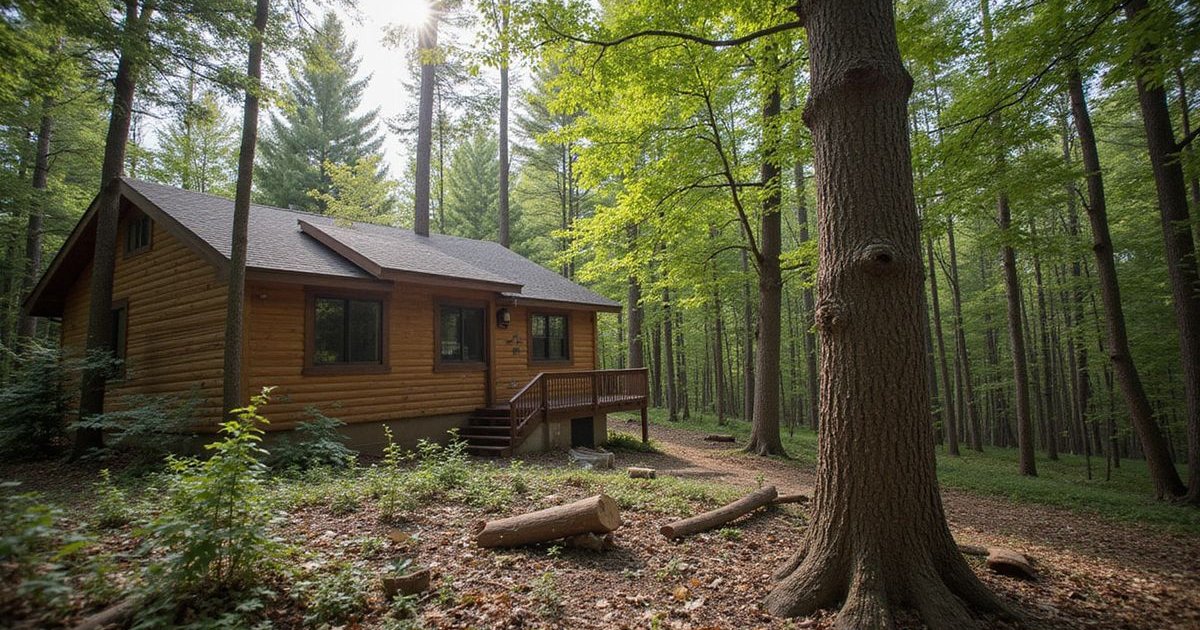
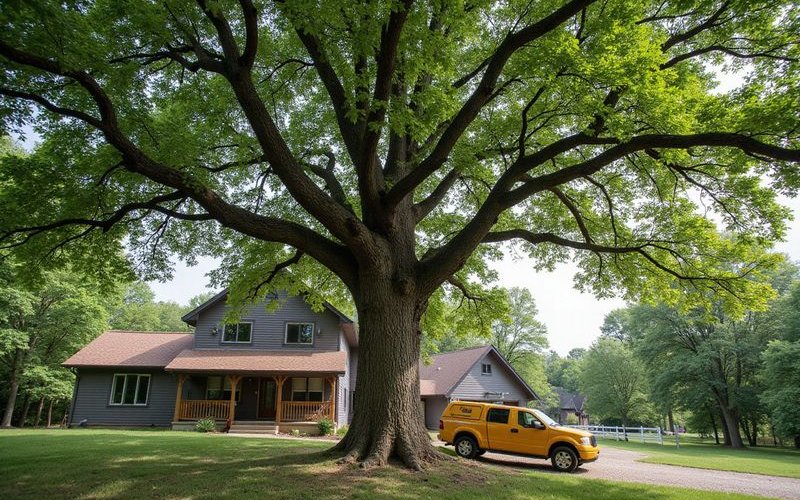
When clearing a lot for new construction, the easy path is removing everything. But from what we have seen in the field, mature trees add significant value—they provide shade, privacy, character, and often 3% to 15% to your property’s overall market value. The challenge is knowing which trees to save.
As an arborist team working with builders throughout the Duluth area and across the U.S., here is how we evaluate trees for preservation during construction.
Trees Worth Saving
Long-Lived, Slow-Growing Species
Some trees take decades to reach maturity. We always tell clients that once these giants are gone, they are irreplaceable in your lifetime.
White and red oak: These are the gold standard for shade and structure. From our experience, oaks reaching 100+ years old grace many North Shore properties and can increase resale potential significantly.
White pine: Our iconic northern tree. Large specimens provide year-round screening and distinctive character.
Sugar maple: Stunning fall color, valuable shade. Slow-growing but worth the wait.
Spruce: Dense evergreen screening, winter interest, valuable in exposed locations.
Birch (with caveats): Shorter-lived than oak but visually striking. Worth preserving if healthy, though often stressed in Duluth’s climate.
Comparative Tree Value Guide
We use this simple framework to help clients weigh their options.
| Tree Species | Typical Lifespan | Construction Tolerance | Best Role on Property |
|---|---|---|---|
| White Oak | 300+ Years | Low (Sensitive) | Shade, Feature Specimen |
| Sugar Maple | 200+ Years | Low (Sensitive) | Fall Color, Cooling |
| White Pine | 200+ Years | Moderate | Windbreak, Privacy |
| Paper Birch | 80-100 Years | Poor (Very Sensitive) | Visual Interest |
| Bur Oak | 300+ Years | High (Durable) | Feature Specimen |
Trees in Strategic Locations
Position matters as much as species.
Privacy screens: Trees along property boundaries provide screening that takes 20+ years to replace with new plantings.
Shade for the house: A mature tree on the south or west side of your building site can significantly reduce cooling costs.
Windbreaks: Trees blocking prevailing winter winds reduce heating costs and make outdoor spaces more comfortable.
Aesthetic focal points: Sometimes a single dramatic tree defines a property’s character.
Trees with Excellent Structure
Even good species should be evaluated individually. We look for trees that are:
- Growing straight with balanced crowns
- Free of major defects (cracks, decay, damage)
- Healthy with good foliage density
- Appropriate distance from the building site
Trees Better Removed
Short-Lived or Problem Species
Some trees cause more trouble than they are worth. We often recommend removing these species to avoid future headaches.
Poplar and aspen: Life span of 30-50 years, weak wood prone to breakage, aggressive roots, constant shedding. You will likely be removing them in a decade or two anyway.
Box elder: Short-lived, weak wood, attracts box elder bugs. A weed tree.
Silver maple: Fast-growing but brittle, invasive roots that damage foundations and sewer lines.
Willow: Constantly dropping branches, aggressive roots seeking water, short-lived.
Cottonwood: Large but weak, massive cotton shedding, root problems.
These species rarely justify the construction compromises needed to preserve them.
Trees Too Close to the Foundation
Trees within 10-15 feet of your foundation will cause problems:
- Roots compete with foundation for moisture, causing soil movement
- Roots can penetrate and damage foundations over time
- Overhanging limbs drop debris on roofs
- Trunk and branch growth eventually contacts structures
- Leaf and needle accumulation in gutters
It is better to remove these now than deal with ongoing maintenance and potential damage.
Trees That Will Be Damaged by Construction
Construction activities harm trees in ways that are not immediately visible. We call this the “Walking Dead” phenomenon because the tree looks fine when you move in but dies 3 to 5 years later.
Root cutting: Roots extend 2-3 times beyond the branch spread. Excavation, utility trenches, and grading cut roots. Trees can tolerate losing 20-25% of roots; more than that often proves fatal within 3-5 years.
Soil compaction: Heavy equipment compresses soil, reducing oxygen and water availability to roots. Trees decline slowly after severe compaction.
Grade changes: Adding soil over roots (even a few inches) can suffocate them. Removing soil exposes and damages roots.
A tree that survives construction may still die years later from these hidden injuries. If construction will impact more than 30% of the root zone, the tree probably is not worth saving.
Hazard Trees
Construction is an opportunity to remove trees that would eventually be problems:
- Leaning trees that could fall toward the new house
- Trees with structural defects (cracks, decay, weak attachments)
- Dead or dying trees
- Trees that will require constant maintenance near the structure
Better to remove them during clearing than face emergency removal later.
The Assessment Process
When evaluating trees for a construction project, we consider:
1. Species Value
Is this a species worth keeping long-term, or a short-lived problem tree?
2. Individual Health
Is this specific tree healthy with good structure, or compromised by disease, damage, or defects?
3. Location Relative to Construction
Can the tree’s root zone be adequately protected during construction? Will the tree be too close to the finished structure?
4. Future Conflicts
Will this tree cause problems in 10, 20, or 30 years? Branches hitting the house, roots in the sewer line, blocking solar panels?
5. Protection Feasibility
Can we realistically protect this tree during construction, or will it be damaged regardless of precautions?
Protecting Trees You Keep
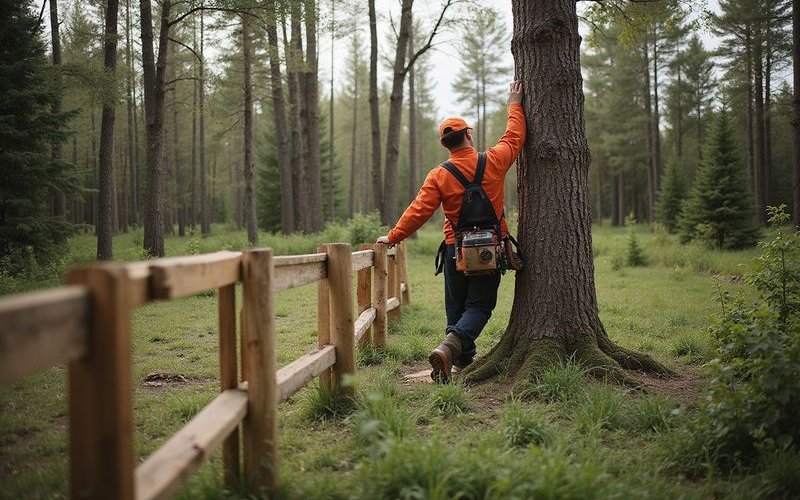
Preserving trees during construction requires active protection. We recommend following the ANSI A300 standards for tree care operations to ensure survival.
Tree Protection Zones
The critical root zone extends roughly 1 foot from the trunk for every inch of trunk diameter. A 20-inch diameter tree needs a 20-foot radius protection zone.
Within this zone:
- No equipment operation
- No soil disturbance
- No material storage
- No grade changes
This is not always fully achievable, but the more root zone protected, the better the tree’s chances.
Fencing
Temporary construction fencing around protected trees keeps workers and equipment out. We strongly advise using fixed chain-link fencing rather than orange plastic snow fencing.
Orange plastic is easily moved or trampled by workers. Steel chain-link stays put and sends a clear message that the area is off-limits. Fencing should be installed before construction begins and remain until completion.
Mulching
A layer of wood chips (4-6 inches) within the protection zone reduces compaction if occasional access is unavoidable.
Monitoring
During construction, check protected trees regularly for damage. Address problems immediately.
Working with Your Builder
Discuss tree preservation early in the design process:
-
Site the house thoughtfully. Small adjustments to building placement can save significant trees.
-
Route utilities carefully. Utility trenches can often curve around important trees.
-
Plan equipment access. Designate paths that avoid tree root zones.
-
Include protection in contracts. Make tree protection zones a contractual requirement.
-
Involve an arborist. Professional assessment before construction identifies which trees to save and how to protect them.
The Long View
It is tempting to clear everything for easier construction. But from our perspective, the trees you preserve today will be the mature specimens that define your property for decades.
A house among trees is more valuable, more comfortable, and more beautiful than one on a bare lot. The key is choosing the right trees to save—species with long-term value, individuals with good health and structure, and positions where they will enhance rather than conflict with your new home.
Planning construction on a wooded lot? Our lot and land clearing service includes tree assessment and preservation planning. Call (218) 555-0391 and we’ll help identify which trees to keep and how to protect them through construction.
Erik Janssen
ISA Certified Arborist serving Duluth and the North Shore since 2016. Dedicated to professional tree care and honest advice.