Lot Clearing for New Construction in Hermantown and Duluth
Building on a wooded lot? Learn about the lot clearing process, selective tree preservation, costs, and permits for Duluth-area construction.
Lot Clearing for New Construction in Hermantown and Duluth
Hermantown and the Duluth area are seeing steady residential construction, much of it on wooded parcels. If you’re building on a forested lot, clearing is often the first step, but it’s not as simple as cutting down every tree. Here’s what you need to know about lot clearing for new construction.
What Lot Clearing Involves
Lot clearing prepares a site for construction by removing trees, brush, and vegetation from the build area. The scope depends on your project’s specific needs and the unique terrain of the Arrowhead region.
Full clearing: removing all trees from the lot or a defined area. This approach is typically used when the entire site needs to be open, such as for large commercial buildings or extensive landscaping projects.
Selective clearing: removing trees only where necessary for the structure, driveway, and utilities, while preserving desirable trees. We find this is preferred for residential construction on larger lots because it maintains privacy and property value.
Brush clearing: removing undergrowth and small trees while keeping larger specimens intact. Property owners often choose this for view opening or fire mitigation without sacrificing the “Northwoods” feel.
Forestry mulching: using a specialized machine to grind small trees and brush into mulch on the spot. This method prevents soil disturbance and leaves a nutrient-rich layer that helps control erosion during the build.
Most residential projects use selective clearing to build among trees rather than eliminating them.
The Lot Clearing Process
Step 1: Site Assessment
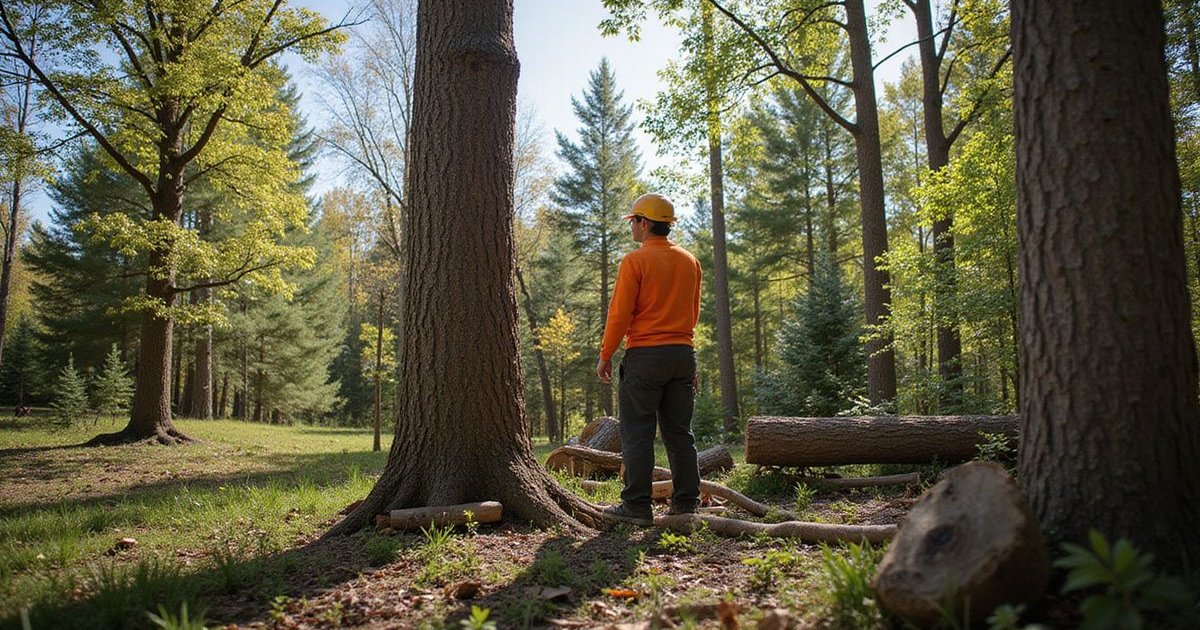
Before cutting anything, we walk the property with you or your builder to understand the layout. This initial walkthrough is critical for identifying potential issues like rock ridges or wetlands common in Hermantown.
Our team looks for:
- Building envelope location: Where will the house sit?
- Driveway route: How will vehicles access the site?
- Utility corridors: Where do power, water, and sewer need to run?
- Septic system location: If not on city sewer
- Trees to preserve: Which trees add value?
- Trees that must go: In the way of construction or hazardous
This planning prevents removing trees you wanted to keep and keeping trees that will need removal later.
Step 2: Marking
We flag trees for removal using standard color codes (usually paint or ribbon) to ensure clarity for the equipment operators.
You will typically see markings for:
- Trees within the building footprint
- Trees too close to foundation (typically within 10-15 feet)
- Trees blocking driveway alignment
- Trees in utility corridors
- Hazard trees that could threaten the new structure
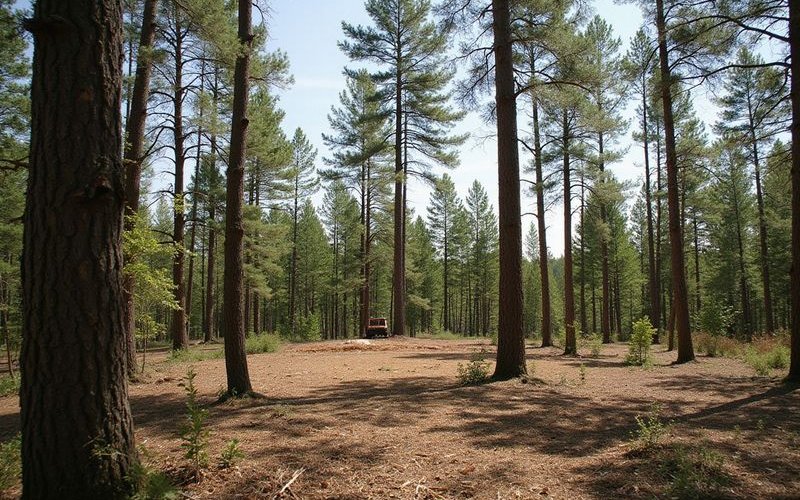
Trees outside these areas are preserved unless you prefer full clearing.
Step 3: Clearing
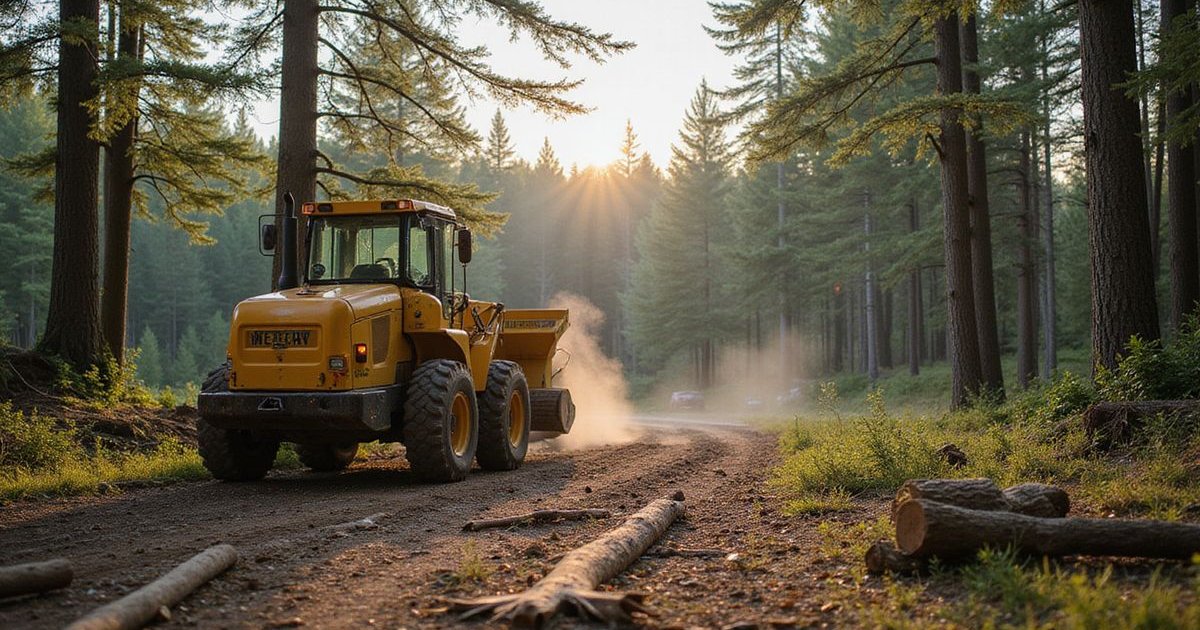
The actual clearing work involves heavy machinery and precise techniques to protect the surrounding landscape.
Felling: Trees are cut and dropped into safe zones. On sloped sites in Duluth, directional felling is mandatory to keep logs from rolling into protected zones or neighboring properties.
Limbing and bucking: Branches are removed and trunks cut into sections.
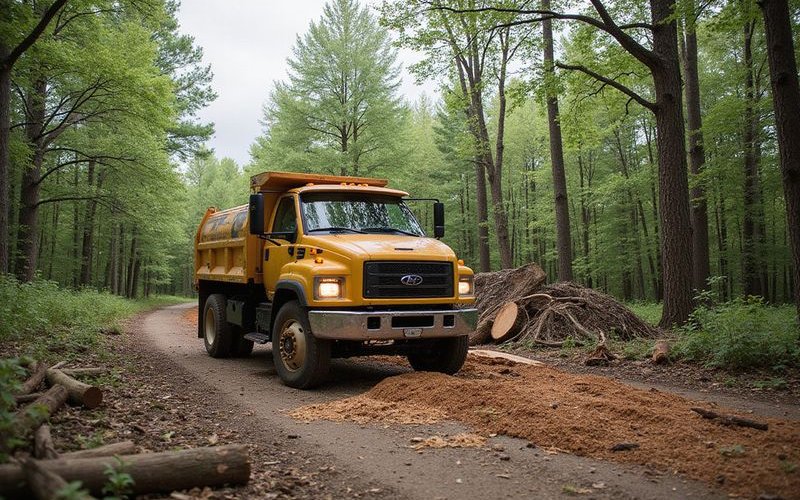
Brush processing: Small material goes through a chipper or forestry mulcher. Mulch can be left on-site for erosion control or hauled away.
Log handling: Merchantable logs can be stacked for sale or your use. Unmarketable wood is typically chipped or hauled.
Stump treatment: Stumps are either ground out (recommended in build areas) or left for excavation (if a basement is planned). We always contact Gopher State One Call (811) before any grinding or excavation to locate underground utilities.
Step 4: Debris Management
What happens to the wood and brush depends on your preference and local disposal regulations.
Chipping: Brush and small material is chipped. Chips can be spread on-site for erosion control or hauled off.
Log removal: Larger logs are cut and stacked for firewood, lumber, or sale. Species like oak and maple have value, while poplar and birch are less marketable.
Stump grinding: Stumps in the build area are ground below grade. Stumps outside the footprint can often be left to decay naturally.
Hauling: Material that can’t be processed on-site is hauled to appropriate facilities like the WLSSD Yard Waste Compost Site. Note that WLSSD requires logs to be cut to a maximum length of 4 feet for disposal, which can affect labor time.
Cost Factors for Lot Clearing
Lot clearing costs vary widely based on the density of the forest and the method used.
Estimated Costs per Acre (2025-2026 Data)
| Density Level | Estimated Cost Range | Typical Scope |
|---|---|---|
| Light Clearing | $2,500 - $5,500 | Brush, saplings, few trees |
| Moderate Wooded | $3,000 - $6,000 | Mixed hardwoods, underbrush |
| Heavily Wooded | $6,000 - $10,000+ | Mature trees, dense growth, slopes |
Most residential lots are a fraction of an acre, so costs scale accordingly.
Tree Size
Large trees take more time and equipment to remove. A lot with mostly small poplar clears faster than one with mature oaks or pines that require careful felling.
Terrain
Hermantown lots are often relatively flat, making clearing straightforward. Duluth hillside lots require more careful work due to steep grades and clay soils.
Specific challenges include:
- Trees must be dropped uphill to prevent rolling
- Equipment access may be limited
- Steep slopes add safety complexity
Access
Can equipment reach the site? Properties accessible only by narrow drives or without existing access cost more to clear because we may need to build a temporary construction entrance.
Debris Handling
Do you want chips left on-site or hauled? Do you want to keep logs for firewood? These choices affect pricing, as hauling requires additional trucking fees and disposal costs.
Stump Grinding
Grinding stumps in the build area adds to the cost but is usually necessary for foundation work. Full excavation of stumps is more expensive but ensures no organic material is left under your future foundation.
Permits and Regulations
Hermantown
Hermantown requires permits for significant tree removal on some properties, particularly those with wetlands. You should verify requirements with the city’s Planning Department or check the Wetland Conservation Act (WCA) administration maps.
Permits are often needed for:
- Lots with shoreland or wetland overlay
- Planned developments with tree preservation requirements
- Properties with conservation easements
Check with Hermantown’s planning department before clearing.
Duluth
Duluth has stricter requirements under the Unified Development Chapter (UDC), including specific Land Disturbance Permits for clearing or grading projects involving more than 3,000 square feet or 50 cubic yards of soil.
Key regulations include:
- Shoreland: Vegetative buffers required near water (typically 50-100 feet depending on the water body)
- Steep slopes: Limits on disturbance on grades over 25%
- Grading permits: Required for significant earth moving
The Duluth Development Services Center can advise on requirements for your specific property.
General Requirements
For all sites:
- Erosion control: Prevent sediment from leaving the site using silt fences or rock entrances.
- Wetland avoidance: Can’t fill or impact wetlands without permits.
- Protected species: Endangered species habitat (rare) requires consultation.
Your builder should be familiar with local requirements, and we coordinate with builders regularly.
Working with Builders
Lot clearing ideally happens early in the construction timeline.
- Survey and design: Know exactly where the house sits
- Lot clearing: Remove trees and brush from build area
- Stump grinding: Clear root obstacles
- Excavation: Basement/foundation work begins
- Construction: Building proceeds
We work directly with builders throughout the Hermantown and Duluth area. If you’re hiring a builder, they may have preferred clearing contractors, or you can hire us directly and coordinate with them.
Selective Clearing: Saving the Right Trees
Not every tree should be saved. We help you balance aesthetics with the long-term safety of your home.
Trees Worth Keeping
- Mature oaks and pines: Slow-growing, valuable for shade and character
- Trees in natural screen positions: Along property lines for privacy
- Trees with aesthetic value: Interesting form, fall color, focal points
Trees Often Better Removed
- Poplar and aspen: Short-lived, weak wood, constant debris
- Trees too close to the foundation: Root conflicts and maintenance issues
- Trees that will be damaged by construction: Root cutting, soil compaction, grade changes often kill trees that look fine initially
Important Protection Rule: Oak Wilt
Do not prune or cut oak trees from April through July. This is the high-risk infection period for Oak Wilt in Minnesota. Our team schedules oak removals for late fall or winter (November to March) whenever possible to prevent this fatal fungal disease from spreading to your healthy trees.
We can advise on which trees are worth working around and which will cause problems long-term.
Get a Lot Clearing Estimate
If you’re planning to build on a wooded lot in Hermantown, Duluth, or surrounding areas, our lot and land clearing service can help with:
- Site assessment and tree marking
- Selective or full clearing
- Stump grinding
- Brush chipping and debris removal
- Coordination with your builder
Call (218) 555-0391 for a lot clearing estimate. We’ll walk your property and provide pricing based on your specific site and requirements.
Erik Janssen
ISA Certified Arborist serving Duluth and the North Shore since 2016. Dedicated to professional tree care and honest advice.