How to Identify Emerald Ash Borer in Your Duluth Yard
Emerald ash borer has reached Duluth. Learn to spot D-shaped exit holes, canopy thinning, and other signs of EAB infestation in your ash trees.
Emerald ash borer (EAB) has formally established itself in the Duluth area, and the window for preventative action is closing. We have watched this invasive beetle decimate ash populations across North America since its initial 2002 discovery in Michigan.
Now the threat is local, and hundreds of millions of trees have already been lost.
If you have ash trees on your property, identifying the early warning signs is the only way to save them. Our team has seen firsthand that once visible damage becomes severe, it is often too late for treatment.
How to identify Emerald Ash Borer in your Duluth yard starts with knowing exactly what to look for and when to look for it.
First: Do You Have Ash Trees?
You cannot assess the risk until you confirm the tree species in your yard. Ash trees (Fraxinus species) are incredibly common in our region, making up a significant portion of Duluth’s urban canopy.
Common species in Duluth include:
- Green ash (Widely planted in boulevards and yards)
- White ash (Native to our local upland forests)
- Black ash (Typically found in wetland areas and swamps)
How to Identify Ash Trees
We often see homeowners confuse ash trees with Boxelder or Walnut trees. Accurately identifying your tree is the first step in our assessment process.
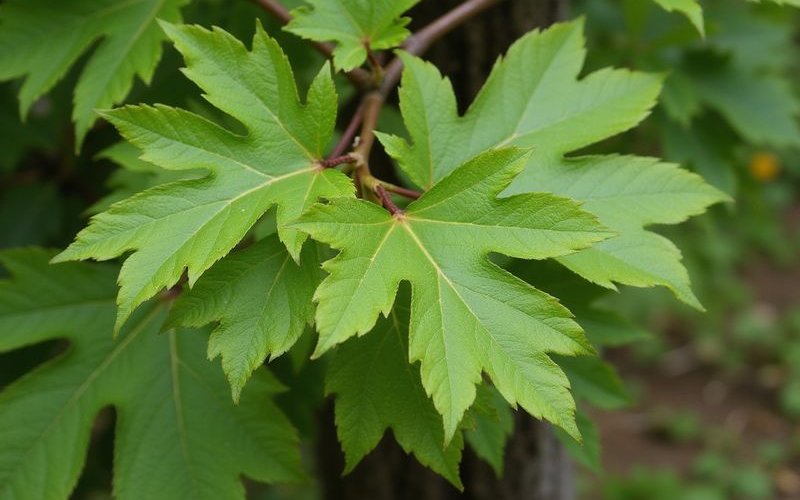
Leaves: Ash features compound leaves with 5 to 11 leaflets arranged opposite each other along a central stem. Each leaflet typically measures 2 to 6 inches long with distinct serrated edges.
Bark: Young ash trees display smooth, gray bark. As the tree matures, it develops a classic diamond-shaped ridge pattern that looks like a tight net.
Branching: Ash trees utilize opposite branching. Branches and buds grow in pairs directly across from one another, rather than staggering up the stem like elm or oak.
Seeds: Female ash trees produce paddle-shaped winged seeds known as samaras. These hang in clusters and often persist well into the winter months.
The “Smiley Face” Test: If leaves have fallen, look at the leaf scar on the branch where the leaf stem used to be. On ash trees, this scar is shaped like a crescent moon or a smiley face.
If you are unsure about your tree species, send us a photo or schedule an ID visit.
Signs of Emerald Ash Borer Infestation
EAB signs progress over several years, and symptoms usually start near the top of the canopy. Early detection is the difference between saving a tree and paying for its removal.
Woodpecker Activity (The “Blonding” Effect)
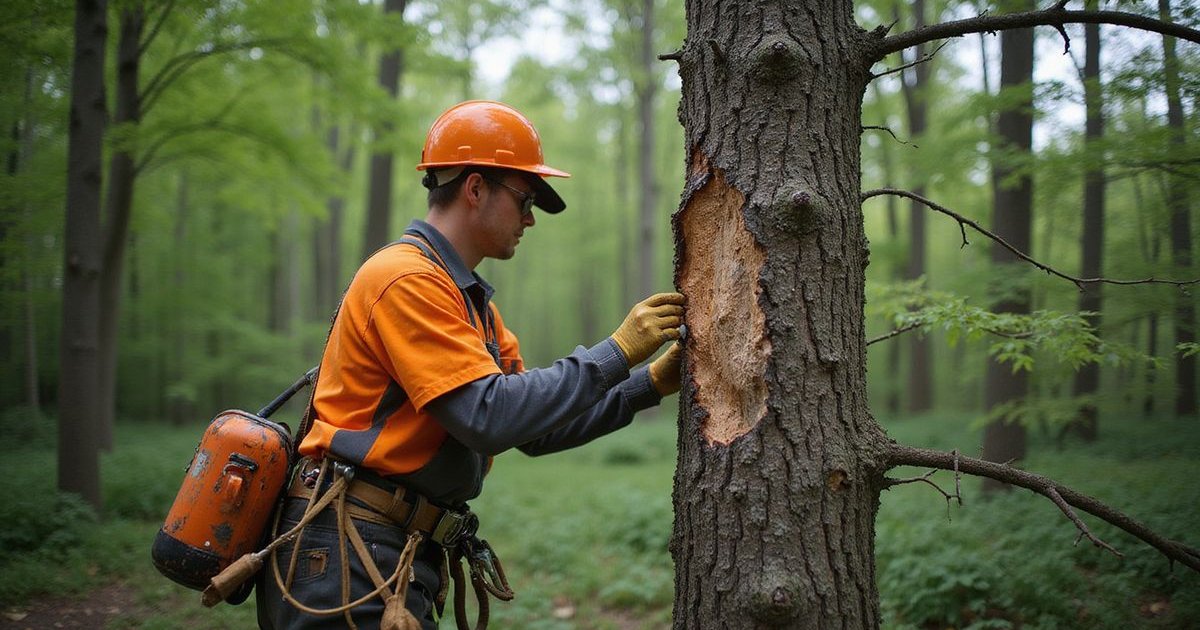
We consider heavy woodpecker activity to be one of the most reliable early indicators in Duluth. Woodpeckers are excellent at finding larvae before humans can see any external damage.
What it looks like: You will see patches of outer bark stripped away, revealing the lighter, “blonde” inner bark. This flecking often starts in the upper canopy and moves down the trunk as the infestation worsens.
D-Shaped Exit Holes
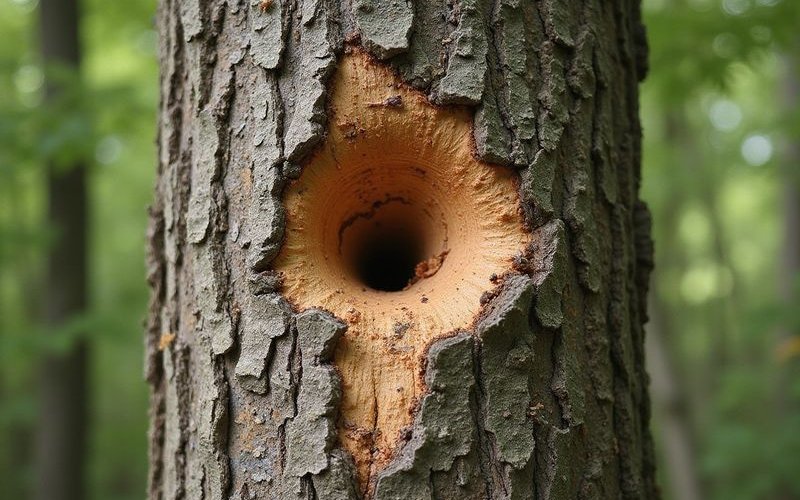
Adult beetles chew their way out of the tree through the bark, leaving very specific holes. These generally appear on the trunk and larger branches.
Key identifier: The hole is roughly 1/8 inch wide and shaped like a capital “D” with a flat side. Round holes are usually caused by native borers or woodpeckers, not EAB.
When visible: Exit holes typically appear from late spring through summer as the new adults emerge to mate. Finding one or two holes usually means the infestation is in its early stages.
S-Shaped Galleries Under Bark
Larvae feed on the phloem layer between the bark and the wood. This feeding creates winding, serpentine tunnels known as galleries.
How to check: If you peel back a small section of loose bark on a declining tree, you will see these S-shaped tracks packed with sawdust-like waste (frass). These tunnels cut off the flow of water and nutrients.
Pro Tip: Do not strip bark from a healthy-looking tree just to check. Look for these galleries on branches that have recently died or where bark has already cracked.
Canopy Dieback
Infested trees slowly starve as the larvae destroy their vascular system. The canopy thins progressively from the top down.
Progression of Damage:
- Year 1-2: Thinning is subtle and restricted to the upper crown.
- Year 2-3: Significant dieback becomes obvious, often involving more than 30% of the canopy.
- Year 3-4: The tree is mostly dead, and large limbs become brittle.
Epicormic Sprouting
As the upper pathways for nutrients are blocked, the tree attempts to survive by pushing out new growth lower down. These are often called “water sprouts.”
What it looks like: Dense clusters of leafy shoots growing directly from the trunk or the base of major branches. This is a sign of severe stress.
Bark Splits and Cracks
Larval tunneling causes the bark to dry out and separate from the wood. We often see vertical splits on the south or west side of the tree trunk.
What EAB Looks Like (And What It Doesn’t)
Confirming the beetle itself is rare because they are small and active high in the trees. However, knowing what to look for prevents false alarms.
Adult Beetle Characteristics:
- Color: Metallic, iridescent emerald green.
- Size: Small and slender, about 1/2 inch long (roughly the size of a cooked grain of rice).
- Body Shape: Bullet-shaped with a flattened back.
- Hidden Feature: If you lift the wings, the abdomen underneath is a distinct coppery-red or purple color.
Larvae Characteristics:
- Color: Creamy white.
- Body: Segmented and bell-shaped (looking like a tapeworm).
- Size: Roughly 1 to 1.5 inches long when fully grown.
Common Lookalikes
We receive many calls about insects that look similar but are harmless to your ash trees.
| Insect | Key Difference from EAB | Risk Level |
|---|---|---|
| Six-Spotted Tiger Beetle | Bright green but has white spots and runs fast on the ground. | Harmless to trees |
| Japanese Beetle | Metallic green head but copper-brown wings; oval shape. | Eats leaves, doesn’t kill trees |
| Lilac Borer | Looks like a wasp; larvae bore round holes, not D-shaped. | Moderate (affects lilac/ash) |
Timeline of Infestation
EAB typically kills an ash tree within 3 to 5 years of the initial attack. Understanding this timeline helps you make the right financial decision.
Year 1: The Invisible Phase Beetles arrive and lay eggs in bark crevices. Larvae bore into the tree. There is almost no visible external damage, and the tree appears healthy.
Year 2: The Subtle Phase The first generation of larvae matures. You might see very slight canopy thinning or increased woodpecker interest. This is the ideal time for treatment.
Year 3: The Decline Phase Canopy dieback becomes obvious. D-shaped exit holes appear on the trunk. Epicormic sprouts may form near the lower branches. Treatment success rates begin to drop.
Year 4: The Danger Phase Major crown die-off occurs. Large branches die and become brittle. The tree is structurally compromised. Removal is usually the only option.
Year 5: The Hazard Phase The tree is dead. Bark falls off in sheets. The wood dries out rapidly, making the tree unpredictable and dangerous to climb or fell.
What to Do If You Suspect EAB
Confirm Identification
Start by gathering evidence.
- Check for the tell-tale D-shaped holes.
- Look for “blonding” on the bark.
- Photograph the canopy thinning pattern.
Contact a Professional
A visual inspection is often not enough to determine the internal health of the tree. An ISA Certified Arborist can:
- Use specific tools to assess the extent of the infestation.
- Calculate the percentage of canopy loss (30% loss is often the cutoff for saving a tree).
- Provide a quote for treatment versus removal.
Don’t Move Firewood
EAB spreads primarily through human transport. St. Louis County is under quarantine guidelines regarding ash wood. Moving infested firewood to a cabin or campsite spreads the destruction to new forests.
Consider Treatment (If Early Stage)
Systemic insecticides are highly effective if applied in time. We utilize professional-grade treatments, such as emamectin benzoate injections, which provide protection for up to two years.
Treatment is an ongoing commitment. If you stop treating a tree in an infested area, it will likely be attacked and killed.
Plan for Removal (If Late Stage)
Heavily infested trees become brittle and hazardous very quickly. Dead ash trees do not stand for long. We recommend removing these trees before they become a liability to your home or power lines.
Protecting Your Ash Trees
Preventive Treatment
You do not have to wait for symptoms to appear. Treating a healthy ash tree is cheaper and more effective than trying to save a sick one.
This approach is best for:
- Large shade trees that cool your home.
- Trees that provide significant property value.
- Trees with excellent structure and no other health issues.
The Cost Reality: Treatment typically costs between $10 to $15 per diameter inch and lasts for two years. Removing a large, mature ash tree in Duluth can cost significantly more, often ranging from $1,000 to over $3,000 depending on complexity.
Monitoring
Check your trees every spring and late summer. Catching the signs early gives you control over the situation.
Diversification
If you decide to remove an ash tree, replace it with a different species. We suggest planting a diverse mix of trees like maples, oaks, or hackberries to ensure your landscape is resilient against future pests.
The Bottom Line
EAB is here, and the cold Duluth winters are not enough to kill the larvae, which can survive temperatures as low as -20°F to -30°F. Every untreated ash tree in our area is currently at risk.
The choice is simple: treat your high-value trees or plan for their eventual removal.
Think your ash trees might have EAB? Our emerald ash borer assessment service can help. Call (218) 555-0391 for an evaluation to decide between treatment and removal based on your tree’s actual condition.
Erik Janssen
ISA Certified Arborist serving Duluth and the North Shore since 2016. Dedicated to professional tree care and honest advice.