How to Prepare Your Trees for Lake Superior Storms
Proactive tree care prevents storm damage. Learn which pruning techniques and inspections protect Duluth homes from wind and ice damage.
Living along the North Shore teaches you quickly that the weather forecast is often just a polite suggestion.
We see the aftermath of these systems every year.
Gale-force winds, heavy ice accumulation, and wet “heart attack” snow stress our local timber beyond its natural limits.
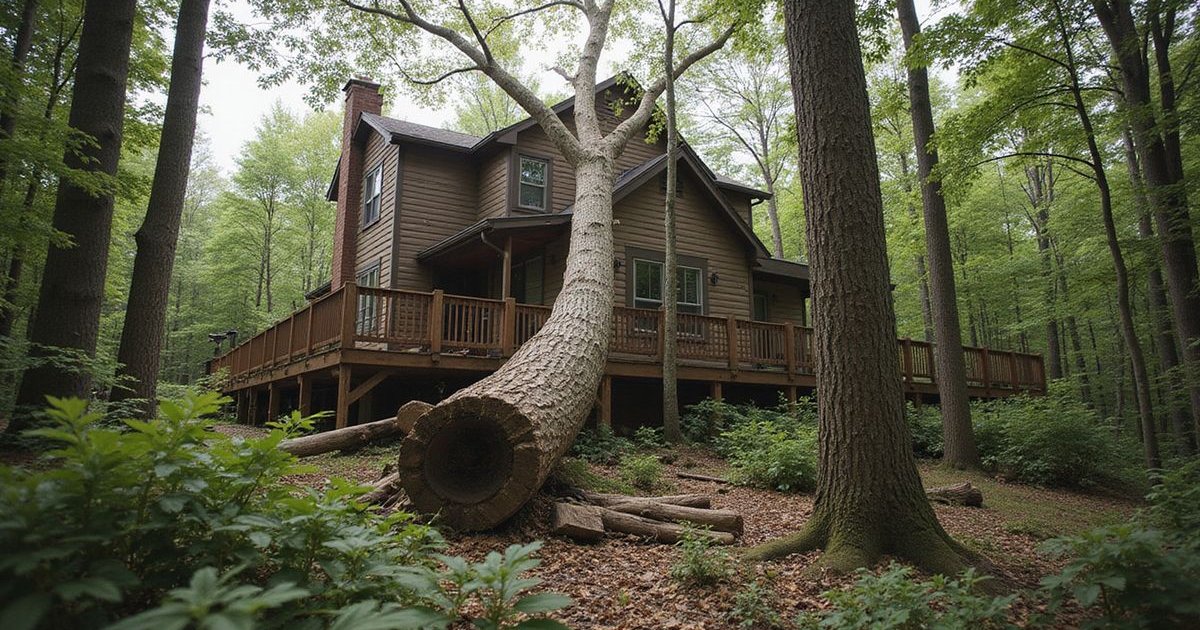
Each major system brings frantic calls from homeowners dealing with trees on their roofs, across their driveways, or crushed through their fences.
The difference between a standing tree and a crushed roof often comes down to preparation.
Proactive care dramatically reduces the risk of catastrophic failure.
Here is exactly how our team helps you prepare your trees before the next big Lake Superior system rolls through.
Understanding Lake Superior Storm Stress
Wind Exposure and The “Fetch” Effect
Lake Superior does not slow down wind the way land does.
Storm systems cross the open water and hit the Duluth hillside with full force, often accelerating as they rise up the ridge.
We call this “fetch,” and it means trees near the shore and on exposed hillsides take a beating that inland trees never experience.
Wind speeds in our region frequently gust over 50 mph during late autumn storms.
Structural failure typically shows as:
- Broken branches: Specifically horizontal limbs that act as levers.
- Root failure: Uprooted trees where the soil plate has lifted.
- Partial root failure: Trees that have developed a new, slight lean.
- Crown twist: Longitudinal cracks caused by the tree twisting in chaotic winds.
Ice and Heavy Snow Load
Our wet, cold storms deposit ice that coats every branch in a heavy glaze.
A single half-inch of ice can increase a branch’s weight by up to 30 times.
We see this weight compounded when heavy, wet snow sticks to that rough ice layer.
Gravity takes over from there.
Ice damage typically manifests as:
- Bent or drooping branches: Limbs that do not spring back after the melt.
- Cracked limbs: Fissures on the top or bottom of the branch near the trunk.
- Split trunks: Vertical cracks running down the main stem.
- Broken leaders: The very top of the tree snaps off, ruining its future growth.
Repeated Stress and Reaction Wood
One storm might not take down a tree, but cumulative damage weakens structure over time.
Small cracks expand with freeze-thaw cycles.
We look for “reaction wood,” which is the tree’s attempt to build extra tissue to support a weak area.
Root systems loosen slightly with each heavy gust.
Each storm pushes the tree closer to a final failure point.
Storm Preparation Strategies
1. Remove Dead and Dying Branches
Dead branches are not a matter of “if” they will fall, but “when.”
Storms simply accelerate this inevitable process.
We adhere to ANSI A300 pruning standards to systematically remove this deadwood before the gales arrive.
Priority targets for removal:
- Large dead branches: Any limb over 4 inches in diameter carries enough kinetic energy to puncture a roof.
- Hangers: Detached branches caught in the canopy (“widowmakers”).
- Target-oriented deadwood: Branches located directly over walkways, driveways, or play areas.
- Decayed limbs: Wood that is soft, spongy, or showing fungal growth.
Removing deadwood is the single most effective storm preparation measure you can take.
If you do nothing else, clear the canopy of dead material.
2. Thin Dense Crowns
Dense foliage catches wind like a sail on a ship.
In winter, a complex branch structure collects significantly more ice surface area.
We perform crown thinning to reduce wind resistance and ice load by allowing air to pass through the tree rather than pushing against it.
Proper thinning involves:
- Selecting interior branches: Removing specific limbs to increase airflow.
- Opening “windows”: Creating gaps that let wind pass through.
- Maintaining form: Keeping the tree’s natural shape intact.
- Limiting removal: Taking no more than 15-25% of the live crown in a single season.
This process requires a professional eye.
Poor thinning, such as “lion-tailing” where only the ends of branches are left, actually increases the leverage on limbs and makes storm damage more likely.
3. Address Structural Weaknesses
Certain growth patterns are ticking time bombs during high winds.
We use specific hardware to reinforce these weak points when removal isn’t the best option.
| Structural Issue | Why It Fails | Correction Method |
|---|---|---|
| Co-dominant Stems | Two trunks meet in a “V” shape. Bark grows between them, preventing strong wood connection. | Cabling/Bracing: Installing high-strength steel or dynamic synthetic cables to limit movement. |
| Over-extended Limbs | Long, heavy horizontal branches act as levers, generating massive torque at the trunk. | Reduction Pruning: Shortening the limb to reduce weight and leverage. |
| Narrow Branch Angles | Branches growing at less than 45 degrees are weakly attached. | Structural Pruning: Removing or suppressing the branch while the tree is young. |
| Old Wounds | Previous damage that failed to “seal” over creates decay pockets. | Risk Assessment: Evaluating the remaining sound wood to determine if the tree is safe. |
Solutions range from selective removal to installing dynamic cabling systems like Cobra or static steel cables to support weak unions.
4. Inspect Root Zones
Root problems are dangerous because they are often invisible until the tree is lying on your lawn.
We inspect the “Critical Root Zone” (CRZ), which generally extends out 1 to 1.5 feet for every inch of trunk diameter.
Look for these warning signs:
- Soil heaving: Ground lifting or cracking on one side of the tree suggests the roots are pulling out.
- Recent lean: A tree that was straight last year and is leaning now is an immediate emergency.
- Construction impact: Root cutting, grade changes, or soil compaction within the past 5 years often leads to delayed failure.
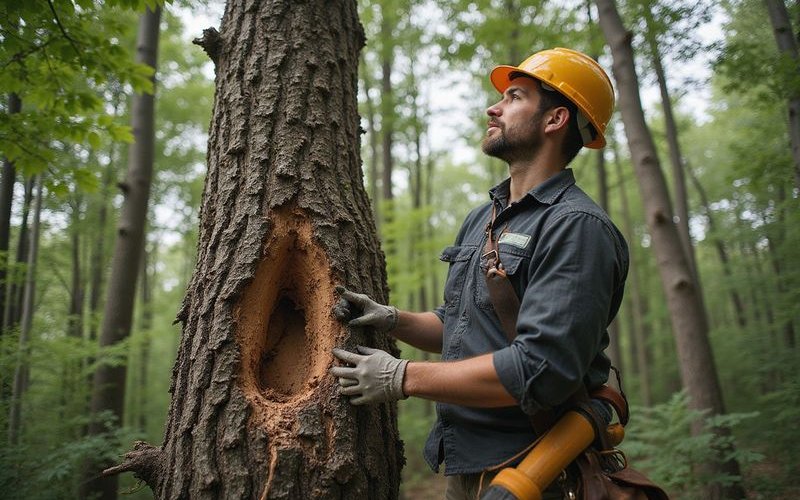
- Fungal growth: Mushrooms growing at the base of the trunk often indicate internal root rot.
If you see soil heaving or mushrooms at the base, get a professional assessment immediately.
5. Consider Species Vulnerabilities
Some trees handle Duluth’s brutal storm conditions better than others.
We have found that genetics play a massive role in survivability.
Wind-resistant species:
- White Pine: Deep roots and a flexible crown allow it to sway with the wind.
- Bur Oak: incredibly strong wood and a spreading form that distributes stress.
- Tamarack: Dropping needles in winter drastically reduces wind and ice load.
Storm-vulnerable species:
- Poplar and Aspen: Fast-growing, weak wood that is prone to snapping.
- Paper Birch: Shallow root systems make them susceptible to wind throw (uprooting).
- Silver Maple: Brittle wood that often fails at branch unions.
- Weeping Willow: The wood is weak and the structure accumulates massive ice weight.
If you have vulnerable species in high-risk locations, such as near your house or over the driveway, proactive attention is mandatory.
6. Manage Trees Near Structures
Trees within falling distance of your house deserve the highest level of scrutiny.
A healthy tree 60 feet from your house poses far less financial risk than a marginally healthy tree 30 feet away.
We use the “Target Rating” concept from the ISA Tree Risk Assessment Qualification (TRAQ).
Assessment questions:
- Is the tree structurally sound based on a visual inspection?
- Does the tree have a lean toward the structure?
- Are there large dead branches overhanging the roof?
- Has the tree received proper maintenance in the last 3 years?
Improving the tree’s condition through pruning and cabling is almost always cheaper than repairing a roof.
Consider that emergency tree removal after a storm often costs 300% more than scheduled maintenance pruning.
The Pre-Storm Checklist
Before the gales of November arrive, walk your property with this assessment list:
☐ Deadwood Check: Are there large dead branches that could fall on people or property?
☐ Density Check: Can you see through the canopy, or is it a solid wall that will catch the wind?
☐ Lean Check: Has the angle of any tree changed since last year?
☐ Trunk Inspection: Do you see deep cracks, splits, or fungal conks on the main stem?
☐ Root Zone Audit: Is there soil heaving or standing water over the root system?
☐ Target Analysis: Are hazardous trees located within striking distance of your home or garage?
☐ History Review: Are trees that were damaged in previous storms still showing signs of stress?
Flag any concerns you find and schedule a professional assessment for anything questionable.
When to Call a Professional
DIY assessment has limits, and safety must come first.
Contact an ISA Certified Arborist when specific conditions arise.
- Uncertainty: You cannot determine if a tree is safe.
- Height: The tree needs structural pruning that requires leaving the ground.
- Decay: You suspect root rot or see cavities in the trunk.
- Support: Cabling or bracing might save a valuable heritage tree.
- Utility Lines: Trees are near power lines (this is strictly professional work due to electrocution risk).
A pre-storm assessment costs a fraction of an emergency removal after failure.
We always remind clients that the damage a failed tree causes to a home far exceeds the cost of preventative care.
The Bottom Line
Lake Superior storms are a fact of life in our region.
Tree failures, however, are largely preventable with the right strategy.
We know that the trees most likely to survive the next gale are the ones that were maintained before the winds started howling.
Ready to prepare your trees for storm season?
Our emergency storm damage service responds 24/7, but prevention is always better. Call (218) 555-0391 for a storm readiness assessment.
We will identify vulnerabilities and recommend specific measures to protect your property.
Erik Janssen
ISA Certified Arborist serving Duluth and the North Shore since 2016. Dedicated to professional tree care and honest advice.