The Emerald Ash Borer Threat on Minnesota's North Shore
EAB is spreading through northern Minnesota. Learn the status in Duluth, quarantine zones, and what property owners should do now.
The Emerald Ash Borer Threat on Minnesota
Emerald ash borer (EAB) isn’t just a headline from the Twin Cities anymore; it is a reality right here in our backyard. We have watched this invasive pest move steadily northward since 2009, and the “wait and see” window for the North Shore has officially closed.
St. Louis County is now firmly in the quarantine zone.
This shifts the conversation from “if” it will arrive to exactly how you should handle the trees on your property. We want to walk you through the latest data, the specific costs you will face, and the practical steps our team uses to manage this transition.
EAB’s March Northward
The Minnesota Timeline
The spread of EAB has been relentless, moving faster than many experts originally predicted. We track these dates closely to help property owners understand the urgency of the situation.
- 2009: First Minnesota detection in St. Paul.
- 2010-2015: Rapid spread through the Twin Cities metro area.
- 2015-2016: The pest jumps to Greater Minnesota, with detections in Duluth and Rochester.
- 2020-2024: Expansions into northern counties including Carlton and St. Louis.
- March 2025: New infestations confirmed in Aitkin County, further closing the ring around our region.
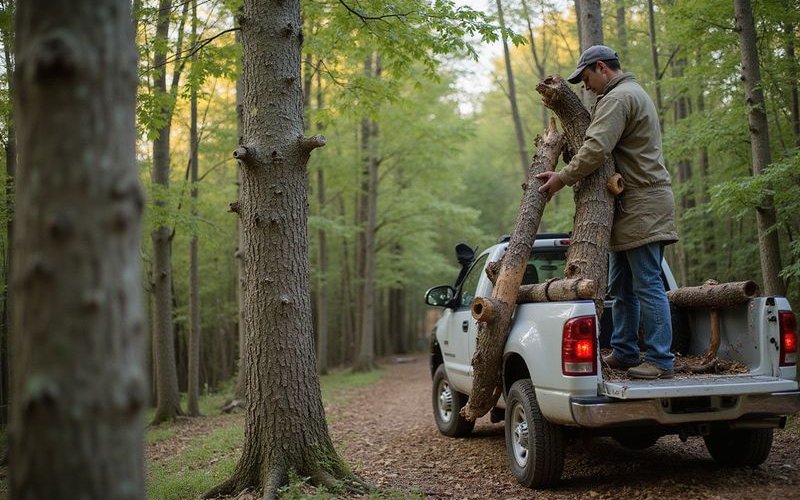
This beetle moves primarily through the transport of infested firewood, which is why local regulations are so strict. Adult beetles can also fly 1 to 5 miles on their own to find new host trees. Once they arrive in a stand of ash, the clock starts ticking for every untreated tree nearby.
Current Status in Our Area
St. Louis County is under a strict state formal quarantine.
This designation carries specific legal requirements:
- Movement Restrictions: You cannot legally move ash wood, waste, chips, or any hardwood firewood out of the county.
- High-Risk Season: The flight season for EAB is May 1 through September 30.
- Pruning Ban: We strongly advise against pruning or removing ash trees during this high-risk window to avoid attracting beetles to fresh wounds.
Confimed presence in the county means your trees are being tested right now. Even if you don’t see the beetles, the larvae may already be tunneling under the bark of your trees.
Why This Matters for the North Shore
Our Ash Population
Ash trees are a dominant feature of our northern landscape, and losing them changes the character of our properties.
- Green Ash: The most common urban ash, often found lining streets in Duluth.
- White Ash: A native forest staple that provides valuable hardwood.
- Black Ash: Found in our extensive wetlands and critical for water table management.
Our team often reminds clients that Minnesota has more ash trees than any other state—an estimated 1 billion. On the North Shore, these trees are not just decoration; they are structural components of our ecosystem and urban canopy.
Economic Impact
The financial stakes for homeowners are higher than many realize. We have seen that ignoring the problem usually leads to the most expensive outcome.
A single mature ash tree provides roughly $168 in annual benefits, including energy savings and stormwater interception.
| Cost Factor | Estimated Expense |
|---|---|
| Preventive Treatment | Approx. $150 - $200 (every 2 years for avg. tree) |
| Removal (Small/Med) | $500 - $1,000+ (one-time) |
| Removal (Large/Complex) | $2,000 - $4,000+ (one-time) |
| Property Value Loss | 5-15% reduction for loss of mature shade |
Comparing these numbers reveals a stark reality. Treatment is often far more cost-effective than removal, sometimes taking over 15 years of treatment to equal the cost of cutting the tree down.
Ecological Impact
The loss of ash trees creates a ripple effect through the local environment.
- Wildlife Habitat: Woodpeckers and other cavity-nesting birds lose their homes.
- Water Quality: Black ash trees in wetlands act as pumps; losing them can cause “swamping,” where the water table rises and changes the forest type entirely.
- Stream Health: Shade from these trees keeps our trout streams cool.
We encourage property owners to think about these broader impacts when deciding between treatment and removal.
What Property Owners Should Know
Quarantine Rules
Minnesota’s quarantine isn’t just a suggestion; it is the law.
Don’t move firewood. This simple rule is the single most important action you can take. If you buy firewood, ensure it is MDA-certified (Minnesota Department of Agriculture) or buy it exactly where you plan to burn it.
Follow the calendar. Avoid cutting or moving ash wood during the active flight season (May through September).
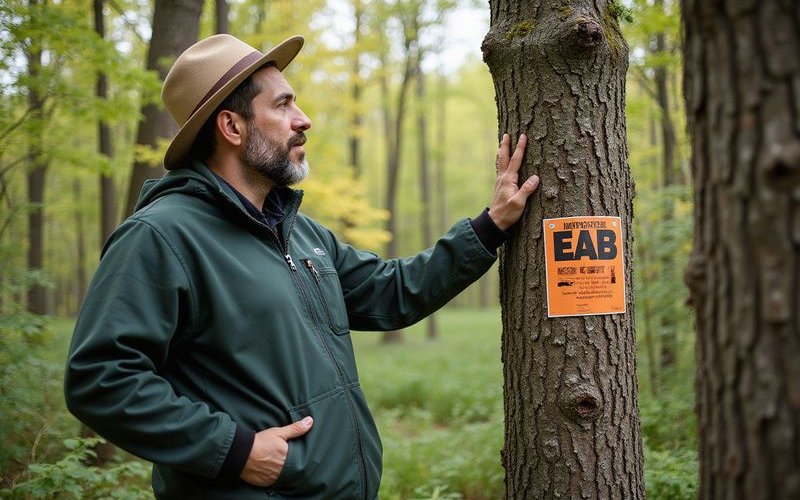
Report suspicious finds. You can contact the Minnesota Department of Agriculture’s “Arrest the Pest” line at 1-888-545-6684 if you spot the tell-tale D-shaped exit holes.
Your Ash Tree Options
You have four distinct paths forward, and we help clients navigate these choices every day.
1. Preventive Treatment This is the gold standard for trees you love. We use professional-grade systemic insecticides like emamectin benzoate, which is injected directly into the trunk. It provides nearly 100% protection for two years.
- Key Insight: You must start this before the tree loses 30% of its canopy. Once damage exceeds that threshold, the tree’s vascular system is too damaged to uptake the medicine.
2. Wait and See This is a high-risk gamble in a quarantined county.
- The Risk: By the time you see symptoms (canopy thinning, woodpecker damage), it is often too late to treat. You are essentially deciding to remove the tree later, likely at a higher price when it becomes brittle and dangerous.
3. Preemptive Removal This eliminates the risk entirely but sacrifices the tree.
- The Benefit: You control the schedule and the budget, avoiding emergency pricing after a storm.
4. No Action This approach lets nature take its course.
- Where it works: This is acceptable for woodlots away from buildings.
- Where it fails: Do not do this near your home, driveway, or power lines. Dead ash trees become “snap hazards” very quickly and are dangerous to fell.
Community Response
Municipal Programs
Local governments are actively managing this crisis. The City of Duluth, for example, has an EAB Management Plan that includes a “staged removal” approach and a 1:1 replacement policy for public trees.
- Check your status: Boulevard trees usually fall under city management.
- Look for help: Some grants, like those from the Great Lakes Restoration Initiative, have funded tree planting in neighborhoods like Lincoln Park and Lakeside.
We always suggest calling your city forester to clarify if a specific border tree is your responsibility or theirs.
Utility Considerations
Power companies have zero tolerance for trees that threaten infrastructure. Minnesota Power and others are aggressively clearing ash trees near lines.
If your tree is within the utility easement, they may remove it for free. However, they will likely not grind the stump or replace the tree, leaving you with cleanup work.
Street Trees vs. Yard Trees
Knowing who owns the tree is step one.
- Public Trees: Located between the sidewalk and curb. Managed by the city.
- Private Trees: Located on your lawn or behind your house. Fully your responsibility.
What We’re Seeing Locally
Our team is on the ground in Duluth and the surrounding areas every week, and the trends are clear.
Treatment works. The trees we started treating five years ago are still full, green, and healthy, standing in stark contrast to untreated neighbors that are now dead.
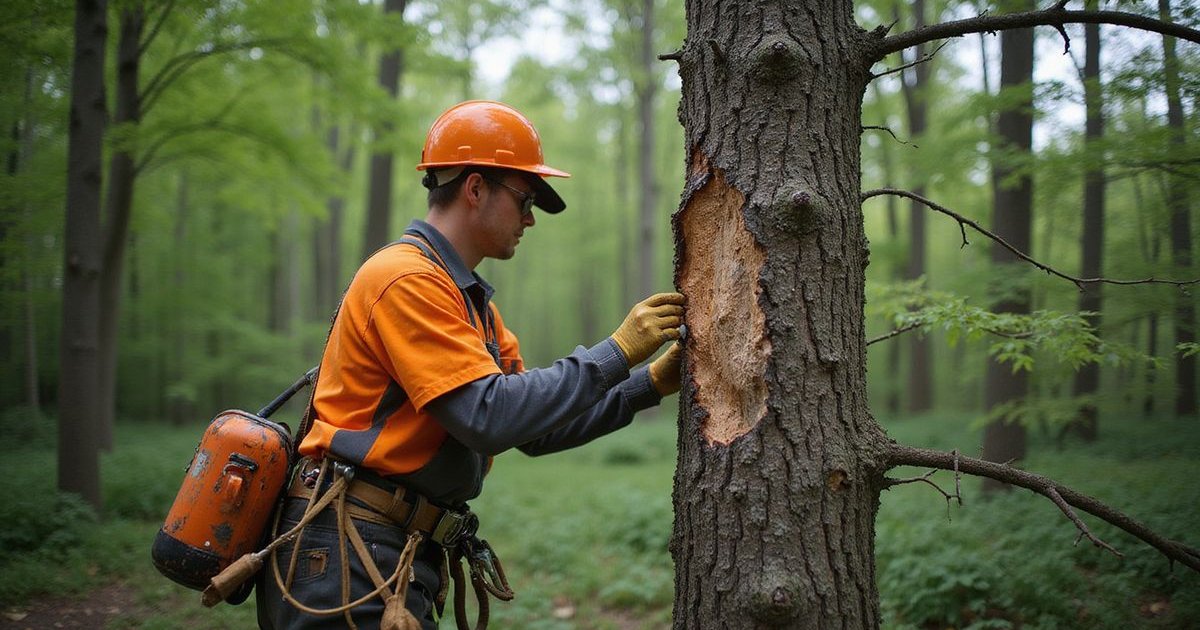
Woodpeckers are the best detectives. We often see “blonding” (where woodpeckers flake off outer bark) long before we see the beetles themselves. If you see this on your ash tree, you likely have a heavy infestation.
Replacement planning is rising. Homeowners are asking for “climate-proof” replacements. We are planting more Swamp White Oak and Hackberry, as these species are predicted to thrive in our zone even as the climate warms.
Winter ID is crucial. Identifying ash trees is easiest in winter because of their “opposite branching” structure (where branches grow directly across from each other).
Recommended Actions
If You Have Ash Trees
- Identify your trees. Look for the opposite branching and diamond-patterned bark.
- Calculate the value. Is the tree shading your west-facing windows? That energy savings pays for the treatment.
- Inspect for “blonding.” Look for light patches on the trunk where woodpeckers have been active.
- Act now. If the tree is healthy, schedule treatment for the spring. If it’s infested, schedule removal before it becomes unsafe to climb.
- Plant for diversity. Don’t replace an ash with another single species. Mix maples, oaks, and elms to protect your yard from future pests.
If You’re Buying Property
You need to look up, not just at the foundation.
- Audit the yard: A property with five mature ash trees could represent a $10,000 future liability.
- Negotiate: Use the presence of untreated ash trees as a point in price negotiations.
- Verify: Ask for records of past treatments.
For Everyone
Buy local firewood. This cannot be overstated.
Report what you see. Your eyes help the Department of Agriculture track the spread.
Plant today. The best time to plant a tree was 20 years ago; the second best time is now.
Looking Ahead
EAB is here to stay, and eventually, every untreated ash tree in Minnesota will die. This sounds harsh, but accepting it allows us to make a plan.
You have the power to decide what your landscape looks like in ten years. You can choose to save your heritage trees through treatment, or you can choose to transition to a new, diverse forest on your own terms.
The only wrong choice is ignoring the problem until the tree fails.
Get an Assessment
If you are looking at your yard and feeling unsure about which trees are ash or what condition they are in, our emerald ash borer service can help. Our team provides comprehensive evaluations to:
- Positively identify ash species.
- Measure tree diameter to give you exact treatment vs. removal cost comparisons.
- Check for early warning signs like exit holes or canopy thinning.
- Design a replanting plan with resilient local species.
Call (218) 555-0391 to schedule your ash tree assessment. We will help you protect your property value and build a safer, greener landscape for the future.
Erik Janssen
ISA Certified Arborist serving Duluth and the North Shore since 2016. Dedicated to professional tree care and honest advice.