Does Homeowner's Insurance Cover Tree Removal in Duluth?
When does insurance pay for tree removal? Learn what's covered, what's not, and how to document storm damage for your claim.
Some storms leave a mess that goes beyond just scattered leaves. We know the sinking feeling of walking outside to see a massive branch resting on your roof or blocking the driveway.
The immediate panic often shifts to a practical financial worry: who pays for this? Our experience handling thousands of removals across the U.S. shows that the answer almost always comes down to where the tree landed.
Most homeowners assume their policy covers any storm damage on their property. That assumption is often incorrect. We have found that insurance carriers rely on specific “proximate cause” guidelines that distinguish between structural damage and simple yard cleanup.
This guide will clarify exactly what the standard ISO HO-3 policies cover, break down the 2025 cost averages you can expect, and explain the one specific auto insurance clause most people miss.
The General Rule: Structural Damage is Key
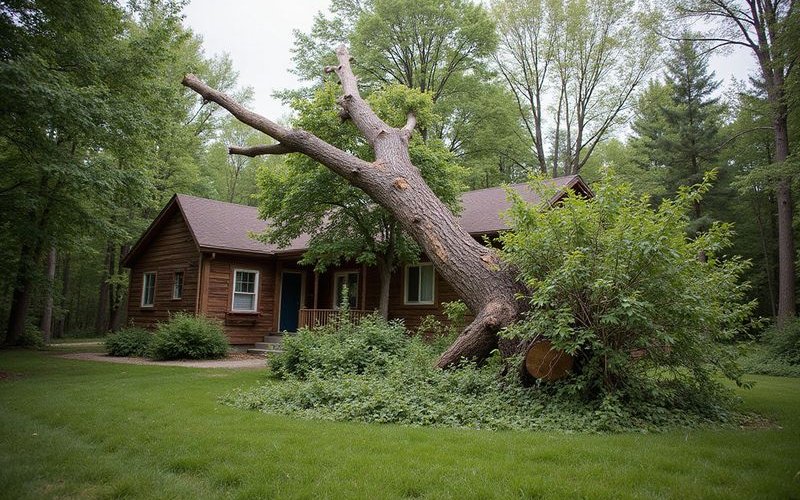
Insurance adjusters typically look for one thing first: did the tree hit a “covered structure”? We have seen claims approved instantly when a pine tree breaches a garage roof, while a similar tree lying on the lawn gets denied.
A “covered structure” generally includes your home, attached garage, and often detached structures like sheds or fences. If the tree damages these, your policy usually pays for both the structural repairs and the cost to remove the tree from that structure.
The contrast in coverage is stark. Our team has seen homeowners pay $2,000 out of pocket for a tree that missed their house by inches, while their neighbor paid only a deductible for a direct hit.
What Is Typically Covered
Damage to Insured Structures
Standard policies (like the common HO-3 form) kick in when gravity does its worst to your buildings. We regularly work with adjusters who approve coverage for:
- The Dwelling: Damage to your roof, siding, windows, and gutters.
- Attached Structures: Porches, decks, and connected garages.
- Detached Structures: Fences, sheds, and gazebos (often covered under “Other Structures” limits).
The payout typically includes three distinct costs. You can expect coverage for the structural repairs, the labor to cut the tree off the structure, and emergency services like tarping a hole in the roof.
Debris Removal Sub-Limits
This is where the fine print catches people off guard. We frequently have to explain to clients that “debris removal” is often a separate bucket of money with a strict cap.
Most policies limit this specific coverage to $500 or $1,000 per tree, regardless of the total removal cost. If a massive oak costs $2,500 to remove from your property, and your limit is $1,000, you are responsible for the $1,500 difference.
The “Blocked Access” Clause
There is one major exception to the “must hit a structure” rule. Our crews have successfully documented claims where a fallen tree didn’t hit the house but completely blocked the main driveway or a handicap access ramp.
Many insurers will cover removal costs in this specific scenario because the home is rendered inaccessible. You should check your specific policy language for “access obstruction” or similar terms.
The “Car in the Driveway” Scenario
A tree crushing a car is one of the most common storm incidents we encounter. We often have to correct the misconception that homeowner’s insurance will pay for the vehicle.
It almost never does. Your home insurance covers the house; your Comprehensive Auto Insurance covers the car.
If a tree falls on your sedan, you must file a claim with your auto insurance provider. We have found that this claim is subject to your auto deductible, not your home insurance deductible.
What Is Typically NOT Covered
Trees That Land in the Yard
This is the hardest conversation we have with homeowners. If a 70-foot pine crashes into your backyard but misses the house, fence, and driveway, the cost is usually 100% yours.
Insurers view this as a landscaping issue rather than a property loss. Unless your policy has a specific “fallen tree” endorsement (which is rare), you will be paying for the cleanup.
Preventative Removal
We often get calls from people asking if insurance will pay to remove a leaning tree before it falls. The answer is a hard no.
Insurance is designed for “sudden and accidental” loss, not maintenance. If you know a tree is rotting, paying to remove it is considered your responsibility as a property owner.
The “Negligence” Factor
Claims can be denied if the insurer determines the tree was obviously dead prior to the storm. We have seen adjusters use Google Street View images to prove a tree was dead for years, allowing them to classify the damage as negligence rather than an Act of God.
Comparative Costs: 2025 Market Averages
Understanding the potential out-of-pocket costs helps you make better decisions. We have compiled the average national pricing for tree removal in 2025 to give you a realistic baseline.
| Tree Size | Height | Average Removal Cost | Typical Insurance Limit |
|---|---|---|---|
| Small | Under 30 ft | $150 - $450 | $500 (Fully Covered) |
| Medium | 30 - 60 ft | $450 - $1,200 | $500 - $1,000 (Mostly Covered) |
| Large | 60 - 80 ft | $800 - $1,500 | $500 - $1,000 (Partial Out-of-Pocket) |
| Extra Large | 80+ ft | $1,500 - $2,500+ | $500 - $1,000 (Significant Out-of-Pocket) |
Note: These prices vary by region and complexity. Emergency storm work often carries a premium.
Who Pays: You or The Neighbor?
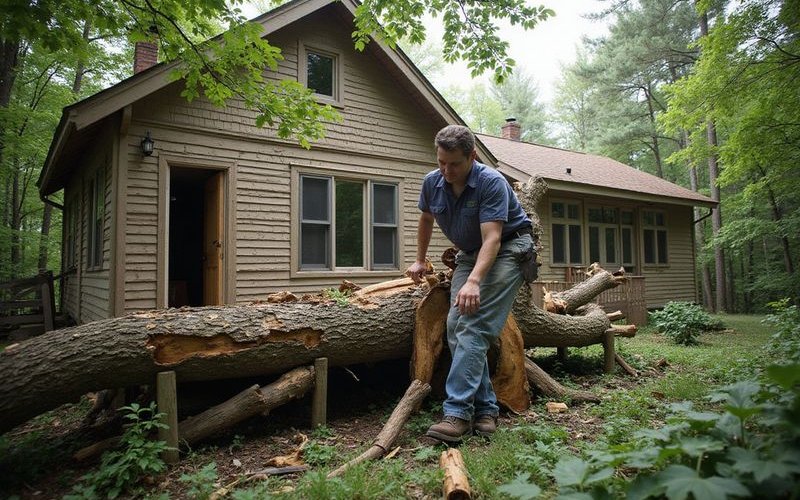
This is the most common dispute we witness after a large storm. We consistently see confusion about who is liable when a neighbor’s tree falls across the property line.
The General Rule
If a neighbor’s healthy tree falls on your house during a storm, you file the claim with your insurance company. It is considered an “Act of God,” and your neighbor is not liable.
The Negligence Exception
The rules change if the tree was a known hazard. If you have written documentation (like a certified letter) proving you warned the neighbor that their tree was dead and dangerous, their insurance may be forced to pay.
We advise clients to keep records of any requests made to neighbors regarding hazardous trees. This paper trail is often the only way to shift liability.
Steps to File a Successful Claim
1. Document Before You Clean
You must create a visual record before our crews or anyone else touches a single branch. We recommend taking photos from multiple distances: wide shots to show the whole scene and close-ups to show the point of impact on the structure.
2. Mitigate Further Damage
Most policies require you to take “reasonable steps” to prevent the situation from getting worse. We suggest tarping broken windows or covering a damaged roof immediately.
Keep every receipt for tarps, plywood, and emergency labor. These costs are almost always reimbursable as part of the claim.
3. Get an Itemized Estimate
Insurers need specifics, not guesses. We provide our clients with itemized quotes that separate the cost of removing the tree from the structure (often covered) vs. removing it from the property (often limited).
This separation helps the adjuster maximize your payout by applying costs to the correct coverage limits.
Protecting Your Wallet Before the Storm
Review Your “Debris Removal” Limit
Check your policy declarations page today. We often see default limits of just $500 for tree debris.
Asking your agent to increase this limit to $1,000 or more is usually very inexpensive and can save you hundreds during a claim.
Create an Annual Photo Log
Walk your property once a year and take photos of your trees. Our team uses these “before” photos to prove to adjusters that a tree was healthy and well-maintained before the storm, defeating any arguments about negligence.
Need Emergency Tree Removal?
When a tree is sitting on your roof, you cannot wait for the paperwork to clear. Our emergency storm damage service works directly with insurance adjusters every day to ensure the removal process is documented correctly for your claim.
Call (218) 555-0391 for 24/7 emergency response. Our crew will safely remove the hazard and provide the detailed photos and itemized invoices you need to get paid.
Erik Janssen
ISA Certified Arborist serving Duluth and the North Shore since 2016. Dedicated to professional tree care and honest advice.