Certified Arborist vs. 'A Guy with a Chainsaw': Why It Matters
The difference between hiring an ISA Certified Arborist and an unlicensed tree cutter. Insurance, safety, and long-term tree health explained.
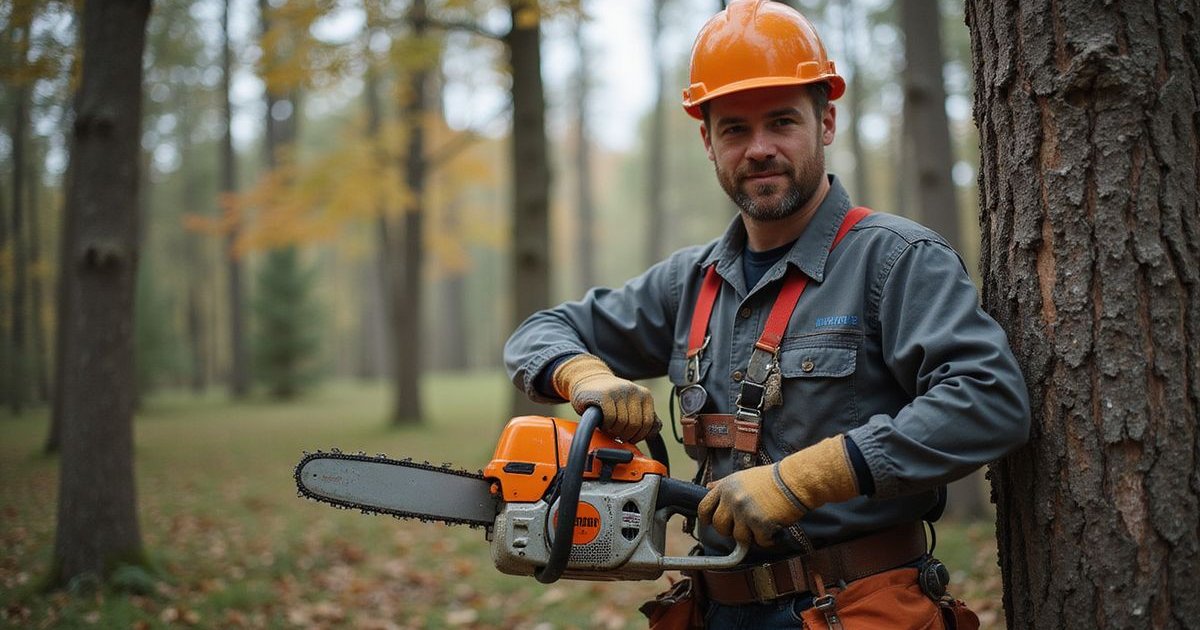
Search for tree service in Duluth and you’ll find everything from nationally certified arborists to guys with trucks and chainsaws offering to cut your tree for cash.
The price difference can be significant.
Is the certification worth it, or are you just paying for a piece of paper?
We see this dilemma every day when talking to clients.
The gap in pricing often reflects a massive gap in safety, liability, and long-term tree health.
Here’s what actually separates a certified professional from an uncredentialed operator, and why that difference matters to your wallet and your safety.
What ISA Certification Means
The International Society of Arboriculture (ISA) is the professional organization for tree care worldwide.
We view this credential as the baseline for competence, not just a fancy title.
ISA Certified Arborist credentials require:
Education and experience: Candidates must have a minimum of three years of full-time experience in arboriculture or a degree in a related field just to qualify for the exam.
Examination: The testing process is rigorous. It involves a 200-question exam covering soil management, identification, diagnosis, pruning, safe work practices, and tree biology.
Continuing education: Certification expires if the arborist doesn’t keep learning. They must complete 30 Continuing Education Units (CEUs) every three years to stay current on the latest pests and safety protocols.
Ethical standards: Every certified arborist signs the ISA Code of Ethics. This strict agreement mandates objective, professional advice and prohibits practices that are known to damage trees.
Certification doesn’t guarantee a good arborist, but it establishes a minimum floor of knowledge and professionalism.
What Uncertified Operators Often Lack
Training in Tree Biology
Proper tree care requires understanding how trees grow, heal wounds, and respond to pruning.
We base our pruning decisions on the CODIT principle (Compartmentalization of Decay in Trees).
Without this biological foundation, mistakes happen quickly:
Topping: Untrained operators commonly top trees by cutting main stems to stubs. This practice starves the tree, promotes rapid decay, and creates weak, dangerous regrowth that can fail during future storms.
Improper cuts: Cuts made in the wrong location, such as “flush cuts” that remove the branch collar, prevent the tree from sealing the wound. These large, open wounds invite rot and pests into the main trunk.
Wrong timing: Pruning at inappropriate times can stress trees or spread disease. For example, pruning oaks in spring creates open wounds that attract beetles carrying the deadly Oak Wilt fungus.
A certified arborist knows why certain practices work and others harm trees.
Safety Training
Tree work is consistently ranked as one of the most dangerous occupations in the United States by the Bureau of Labor Statistics.
Our crews strictly adhere to the ANSI Z133 safety standard, which governs tree care operations.
Proper training covers:
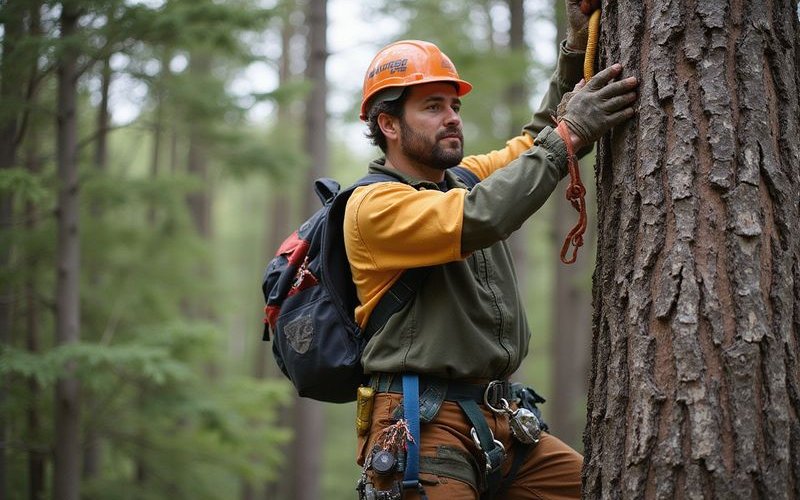
Climbing techniques: Professional climbers use specialized ropes, saddles, and friction devices. This gear prevents falls and protects the tree’s bark from damage caused by climbing spikes.
Rigging: Bringing down large limbs over a roof requires physics, not just luck. We use port-a-wraps and blocks to control the weight and speed of falling wood.
Chainsaw operation: Safe cutting practices prevent “kickback,” a violent reaction that is a leading cause of industry injuries.
Hazard recognition: A trained eye can spot structural defects, such as included bark or hollow cavities, that make a tree unsafe to climb.
Emergency response: Certified crews are trained in aerial rescue. They know exactly how to get an injured climber to the ground safely if an accident occurs.
Untrained operators often lack this systematic safety knowledge.
They might be fine 99 times, until they’re not.
Insurance Coverage
This is the single biggest financial risk for homeowners hiring uncertified labor.
Legitimate tree services carry:
General Liability insurance: This covers damage to your property, your neighbor’s house, or cars. Policies for tree work generally start at $1 million per occurrence.
Workers’ compensation: This is distinct from liability. It covers medical costs and lost wages for employees injured on the job.
Why it matters: Homeowner’s insurance policies often exclude claims related to unpermitted or unlicensed contract work. If an uninsured worker falls from a ladder on your property, you could be personally sued for their medical bills and lost wages.
Their low price puts your assets at risk.
Always ask for certificates. A reputable company provides insurance certificates directly from their agent. If they hedge or show you an expired card, find someone else.
Business Practices
Running a legitimate tree service involves significant regulatory compliance.
Licensed businesses:
- Pay taxes and high workers’ comp premiums (often 15-20% of payroll).
- Maintain proper equipment.
- Train employees regularly.
- Follow safety regulations.
- Stand behind their work with written contracts.
“Cash only” operators avoid these costs.
That is not a savings for you.
It’s a sign of corners being cut.
Price Difference: What You’re Paying For
An uncertified operator might quote $600 for a job that a certified arborist quotes at $1,200.
We understand that seeing double the price can be shocking.
What explains the difference?
The Cost Breakdown
It helps to see where that money actually goes.
| Cost Factor | Certified Arborist | Uncertified Operator |
|---|---|---|
| Insurance | Comprehensive Liability & Workers’ Comp | None or Personal Auto Only |
| Equipment | Bucket Trucks, Chippers, Safety Gear | Pickup Truck & Ladder |
| Personnel | Trained, Background-Checked Pros | Day Labor or Solo Operator |
| Technique | ANSI A300 Pruning Standards | Random Cuts / Topping |
| Risk | Company Assumes Risk | You Assume Risk |
Insurance and Overhead
Proper insurance costs money.
Tree service insurance is among the most expensive in the construction trades due to the high risk.
A legitimate business builds these costs into pricing to ensure you are protected.
Equipment
Professional equipment requires substantial investment.
A reliable bucket truck can cost over $150,000, and commercial chippers start around $40,000.
Professional-grade tools work better and last longer.
Training
Keeping crews trained and certified takes time and money.
We invest in ongoing safety workshops and skills training.
This investment produces better work.
What You Don’t See
The cheap operator might:
- Have no insurance (you’re exposed).
- Use worn or inadequate equipment.
- Cut corners on safety.
- Damage your trees with improper techniques.
- Disappear if something goes wrong.
The price looks better until something bad happens.
When Certification Matters Most
Hazard Tree Assessment
Is a tree dangerous?
We use the ISA Tree Risk Assessment Qualification (TRAQ) to scientifically evaluate danger.
A certified arborist can conduct a systematic tree risk assessment and provide documentation.
An uncertified operator can offer their opinion, which may or may not be correct.
Insurance and Legal Matters
You may need an expert witness for a claim.
If you need documentation for insurance claims, neighbor disputes, or legal issues, a report from an ISA Certified Arborist carries professional weight.
“A guy said…” doesn’t hold up in court.
Tree Preservation
Want to save a tree that’s struggling?
Proper diagnosis and treatment requires knowledge of tree biology, pathogens, and care techniques.
We can often save trees through soil aeration, cabling, or targeted treatments.
Untrained operators default to removal because that is the only tool they have.
Pruning for Long-Term Health
Proper pruning promotes healthy growth and reduces future problems.
Improper pruning damages trees permanently.
A common mistake is “lion-tailing,” where an operator strips all inner branches, leaving heavy foliage at the ends.
This makes branches more likely to snap in high winds.
The cuts you accept today affect the tree for decades.
Near Structures and Utilities
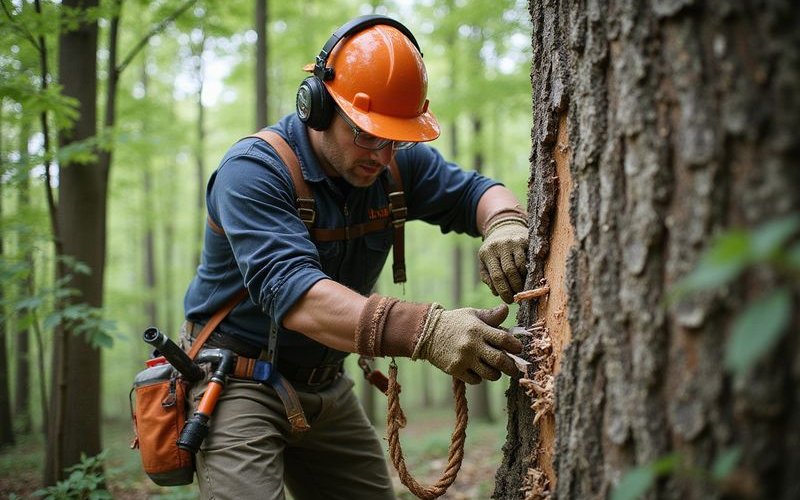
Technical removals near houses, power lines, and other sensitive areas require skill and judgment.
We ensure our team is aware of electrical hazards through programs like EHAP (Electrical Hazards Awareness Program).
The consequences of error are significant.
When It Matters Less
For some jobs, certification matters less:
Simple cleanups: Cutting up a tree already on the ground or removing brush piles.
Straightforward removals: A small tree (under 15 feet) in an open area with no complications.
Hauling: Taking away debris or logs.
Even for simple work, insurance still matters.
But if you’re just looking for someone to cut up a fallen tree, extensive credentials may be unnecessary.
How to Verify Credentials
Check ISA Certification
ISA maintains a searchable database: treesaregood.org/findanarborist.
You can search by name or location to verify certification.
Always check that the individual on your property is the one holding the certification.
Request Insurance Certificates
Ask for:
- Certificate of liability insurance (current, with adequate coverage).
- Certificate of workers’ compensation (for their employees).
Check that certificates are current.
Call the insurance agency listed on the certificate to confirm the policy is active.
Look for Business Registration
Legitimate businesses have:
- State contractor registration (if required).
- Business licenses.
- Physical address (not just a PO box).
- Professional presence.
Read Reviews
Online reviews reveal patterns.
Look for:
- Consistent praise for professionalism.
- Completion of promised work.
- Handling of problems when they arise.
Red flags include multiple complaints about damage, disappearing after problems, or unprofessional behavior.
The Bottom Line
The difference between a certified arborist and an uncertified operator isn’t just a piece of paper.
It’s the difference between guessing and knowing.
It’s:
- Training that produces better work.
- Insurance that protects your property.
- Knowledge that prevents tree damage.
- Professionalism that ensures accountability.
For significant tree work—especially anything involving risk assessment, technical removal, or tree preservation—certification matters.
For simple cleanup, insurance is still essential even if credentials are less critical.
When in doubt, ask yourself: if something goes wrong, who do I want to have hired?
Need tree work from an ISA Certified Arborist? Call (218) 555-0391 for a professional assessment and quote. We’re fully insured, properly certified, and committed to doing the job right.
Erik Janssen
ISA Certified Arborist serving Duluth and the North Shore since 2016. Dedicated to professional tree care and honest advice.